How Lemon Vibrators Help Rebuild Sexual Confidence After Relationship Trauma
Let's be real. After relationship trauma, your body doesn't feel like yours anymore. Touch becomes a minefield. Pleasure feels like a luxury you're no longer allowed. And the thought of sex, even alone, carries weight it never did before.
This is where most advice breaks down. People tell you to "just relax" or "give it time" as if your nervous system didn't get rewired by betrayal or pain. What you actually need is a tool that gives you control, gentleness, and the kind of predictable sensation that helps your body remember it's safe to feel good again.
That's where lemon vibrators come in. They're not going to fix what happened. But they can be part of how you reclaim your pleasure on your own terms.
Why trauma changes how your body responds to touch
When relationship trauma happens, your nervous system shifts into protection mode. Your body learns to brace instead of relax. Even when you intellectually know you're safe, your physiology hasn't caught up. Touch that used to feel good suddenly triggers alertness, defensiveness, or numbness.
This isn't weakness or brokenness. It's your nervous system doing exactly what it was designed to do: keep you safe.
The problem is that traditional vibrators often feel demanding. They require you to surrender to intensity, to push yourself into feeling something you're not ready for. When you're healing, that pressure backfires. Your body resists. Pleasure becomes another place where you feel pressured instead of free.
Lemon vibrators work differently because they don't use conventional vibration. Instead, they use pulsing suction. That distinction matters enormously when you're rebuilding.
What makes suction feel safer than vibration
Think of the difference this way. Traditional vibration is a pattern of movement that requires you to meet it halfway. Your body has to sync with the toy's rhythm. If you're already in a state of nervous system activation, that external demand can feel invasive.
Suction, by contrast, is responsive. The sensation is consistent and comes from the toy without requiring your tissue to vibrate back. There's no internal oscillation. It feels more like a gentle pull than a buzz. That distinction might sound small, but physiologically, it changes everything.
When your nervous system is in protection mode, responsive sensation feels less threatening than demanding sensation. Lemon vibrators give you something you can mold around, rather than something you have to match.
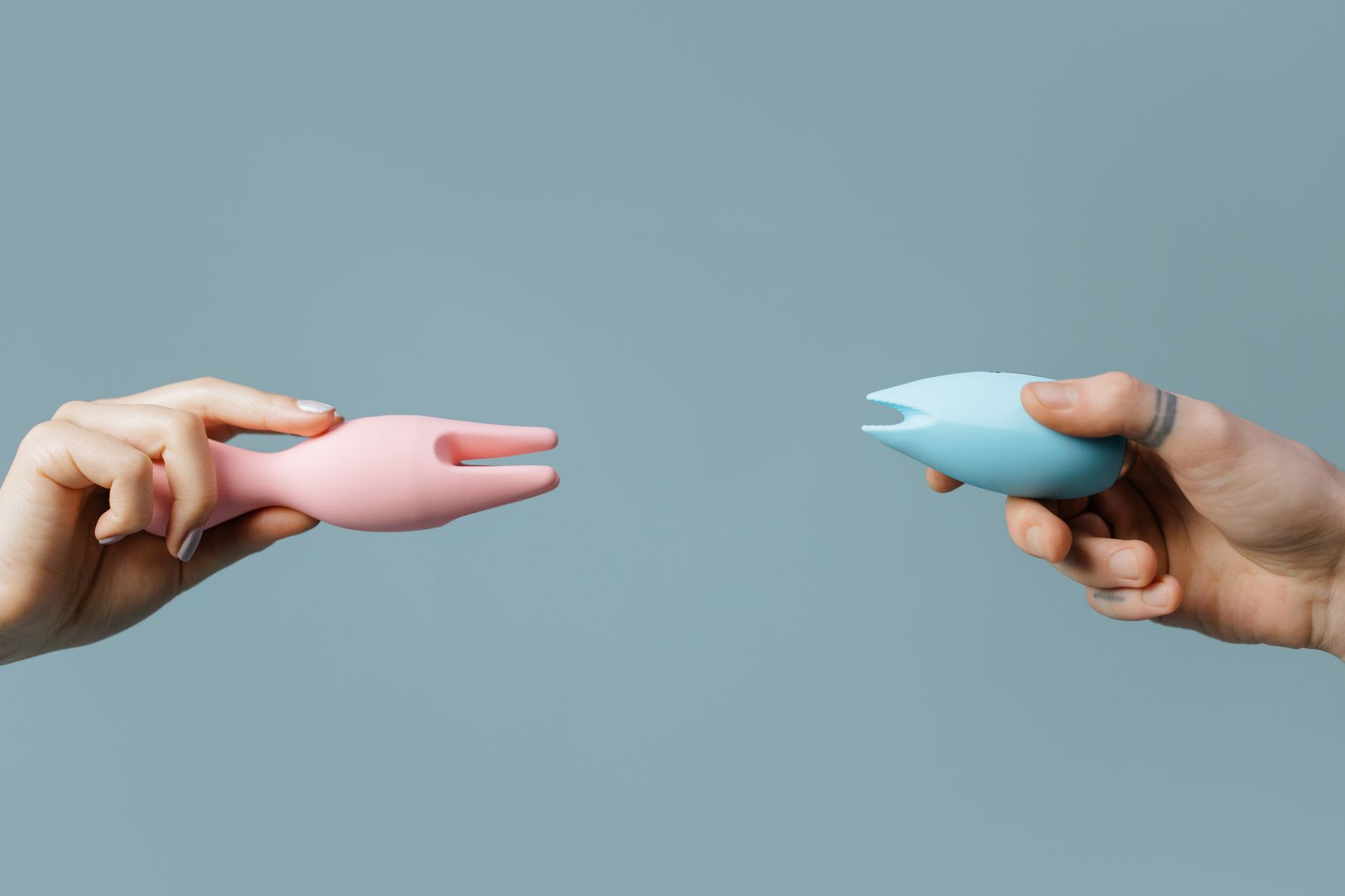
Photo by cottonbro studio on Pexels
How suction helps you rebuild pleasure from zero
Healing from relationship trauma often means starting your pleasure map from scratch. Your body needs to relearn that sensation can be safe, that your pleasure matters, and that you have control over what happens.
Lemon clitoral vibrators are built for exactly this. Here's what that process looks like:
You control the intensity from the first second. Most lemon vibrators have multiple suction levels. You start at level one, which is barely perceptible. That's not a bug. It's a feature. Your body gets to acclimate to sensation at its own pace, not the toy's pace.
The sensation is localized and predictable. With traditional vibrators, the sensation can travel and feel scattered. Suction is focused. You know exactly where it's happening and what it will do. For a nervous system in healing mode, predictability is grounding.
You can stop anytime without guilt. If you're in the middle of exploring and something triggers you, you stop. No shame, no pressure to push through. Lemon vibrators make that easy because the sensation disappears the moment you release. There's no residual buzz or vibration. It's just off.
The emotional work that happens alongside pleasure
Here's what I want to be clear about. Using a lemon vibrator isn't going to process your trauma for you. But it can be a powerful part of your healing toolkit because it teaches your body something essential: you can feel good, and you get to decide when and how.
After relationship betrayal, that autonomy is everything. Your partner violated your trust. Your body learned that closeness could hurt. Rebuilding pleasure alone, on your own terms, with a tool that responds to your needs instead of demands, literally rewires that learning.
Many of my clients report that their first real sense of safety with sensation again comes during solo exploration with a lemon vibrator. Not because the toy is magical, but because the experience proves something: your body is still capable of pleasure, and you're in charge of it.
Starting slow when you're ready
If you're in early healing, here's what I recommend:
Start with the lowest setting. Don't push into intensity. The goal is not to orgasm or to reach some pleasure milestone. The goal is just to feel sensation and notice that your body can respond without threat.
Give yourself 10-15 minutes. No timer pressure. Just explore. If you feel triggered, stop. That's data. Your nervous system is telling you something. Listen to it.
Over days or weeks, as your body gets more comfortable, you might move to a higher setting. Or you might not. Some people spend weeks at level one and that's completely normal. Healing is not a race.
If you're further along in recovery and ready to reconnect with pleasure more fully, a lemon clitoral vibrator still offers something traditional toys don't: the ability to titrate sensation, to feel something that's supportive rather than demanding. Many people find that suction actually feels more pleasurable once they're past the acute phase of trauma recovery.
When to bring a partner back in
This is where things get tricky. Using a lemon vibrator solo is about reclaiming your pleasure as yours. Bringing a partner back into pleasure territory is a separate conversation.
I usually recommend that solo exploration happens first. Let your body learn it's safe with pleasure before you negotiate pleasure with another person. Once you've had a few weeks or months of positive solo experiences, you might consider how to talk to your partner about a lemon clitoral vibrator if that feels right.
But here's the important part: solo pleasure stays solo until you're genuinely ready. No timeline. No pressure.
When you might need additional support
If you find that suction triggers you, or if numbness persists even at very low settings, that's worth discussing with a trauma-informed therapist. Some nervous systems need additional support to downregulate before pleasure tools can help.
Likewise, if past trauma is still affecting arousal or sensation, a good therapist can help you understand what's underneath that. A lemon vibrator is a tool, not a treatment.
There's also value in rebuilding emotional intimacy with a partner separately from physical pleasure. Sometimes the disconnect is more relational than physiological.
The neuroscience of pleasure reclamation
What's happening when you use a lemon vibrator for the first time after trauma is that your brain is building new neural pathways. Old associations said: "Touch equals threat." New associations say: "I control sensation, and it feels okay."
That rewiring takes time, but it's real. Every time you experience pleasure on your own terms, you're literally changing how your nervous system responds. That's not therapy speak. That's neurobiology.
The suction sensation from a lemon vibrator is particularly effective at this because it's gentle enough not to re-trigger your nervous system while still being distinct enough for your brain to register: "This is different. This is safe."
Pleasure is part of healing, not separate from it
Trauma can make you feel like your body is your enemy. Like pleasure is frivolous or something you don't deserve. Rebuilding your relationship with pleasure is part of reclaiming your body as yours.
That doesn't mean forcing it or pushing into anything uncomfortable. It means gentle, patient exploration with tools that respect your nervous system's need for safety and control. Lemon vibrators are built for exactly that.
Your pleasure matters. Your autonomy matters. Your body's right to feel good again matters. Start there.
People Also Ask
Is it normal to feel triggered when using a pleasure toy after relationship trauma?
Completely normal. Your nervous system is still protective. If a lemon vibrator (or any toy) triggers you, it's not a sign you're broken. It's information. Stop, breathe, and give yourself time. Some people need weeks before their body feels safe with sensation. Others need longer. There's no right timeline. If triggers persist, working with a trauma-informed therapist can help you understand what your body needs to feel safe.
Why does suction feel less intense than vibration even at the same power level?
Because it is less intense in a neurological sense. Vibration creates movement within tissue, which activates more neural pathways simultaneously. Suction is a focused, directional sensation that your nervous system can process more easily. For healing nervous systems, that difference is significant. Your body has fewer signals to interpret, so it feels safer.
How long does it typically take to feel comfortable with pleasure again after betrayal?
There's no standard timeline, and comparing yourself to others will just frustrate you. Some people feel shifts within weeks. Others need months or years. Healing isn't linear. You might feel good for several weeks, then have a setback where touch feels threatening again. That's not failure. That's your nervous system doing its job. Patience with yourself is part of the process.
Can I use a lemon vibrator with a partner if the trauma was in that relationship?
Not until significant healing has happened, usually with professional support. If the trauma is in the current relationship, using a toy together can feel like gaslighting your own experience ("see, we can still be sexual," when the real issues aren't addressed). If it's from a past relationship and you're in a new partnership, exploring solo first is still the safer starting point. Once you trust your own pleasure again, partnered exploration becomes a conversation.
What if I feel numb instead of triggered?
Numbness is also a protective response. Your body is dissociating from sensation to keep you safe. That's common after trauma. Using a lemon vibrator at the lowest setting can sometimes help you gently reconnect with sensation, but pushing against numbness usually backfires. A trauma-informed therapist can help you understand whether your body needs more time, or whether additional support would help.
Are lemon vibrators better for trauma recovery than traditional vibrators?
For many people, yes. The suction sensation feels less demanding and more controllable. But everyone's nervous system is different. Some people find any toy triggering initially. Some find vibration helps them reconnect faster than suction. What matters is what feels right for your body, not what's theoretically "better." Start with what intuitively feels gentlest, and adjust from there.
Moving forward
Reclaiming your pleasure after relationship trauma is an act of self-care and reclamation. It's not about performance or reaching some sexual milestone. It's about your body learning it's safe to feel good again, and you having agency in that process.
Lemon vibrators can be part of that journey because they're built for gentleness, control, and responsiveness. But the real work is yours. Be patient with yourself. Your body will remember pleasure when it feels safe. That takes time, and that's exactly as it should be.
If you want to talk through what healing looks like for your specific situation, reach out. You don't have to figure this out alone.