The numbness isn't laziness. It's your brain protecting itself.
You've had sex with the same person for ten, fifteen, twenty years. The rhythm is predictable. The timing is predictable. Even the sounds are predictable. And somewhere around year five or seven, your body stopped lighting up. You go through the motions. It feels fine. But fine is the problem.
Here's what I see in my practice: people describe this as "losing attraction" or "the spark dying," but that's not what's happening neurologically. Your brain has literally catalogued every sensation, every movement, every outcome, and filed it under "known." When something is known, your nervous system allocates less attention to it. Less attention means less sensation. Less sensation means less arousal.
Routine sex isn't actually the problem. Routine without novelty is the problem. And fixing it doesn't require leaving your partner.
Why routine kills sensation (and it's not about love)
Neuro-adaptation is real. Your nervous system is designed to ignore repetitive stimuli. This is why you stop noticing the smell of your own house or the hum of your refrigerator. It's also why the same touch that thrilled you in year one barely registers in year eleven.
This isn't a reflection on your partner. It's not a reflection on your relationship. It's pure neurobiology. Your brain is doing exactly what it's supposed to do.
But here's the part no one tells you: numbness during sex is the nervous system's way of downregulating arousal. When your body predicts what's coming, it doesn't bother producing the physiological responses that make sex feel good. Your clitoris doesn't engorge as fully. Lubrication doesn't flow as generously. Orgasm takes longer to reach, if it reaches at all.
Most couples interpret this as a lack of desire. They blame hormones, or age, or "just not being attracted anymore." Then they either resign themselves to "this is what marriage looks like," or they end the relationship. But the real issue is that their nervous system needs novelty to stay engaged.
Why lemon vibrators rewire the equation
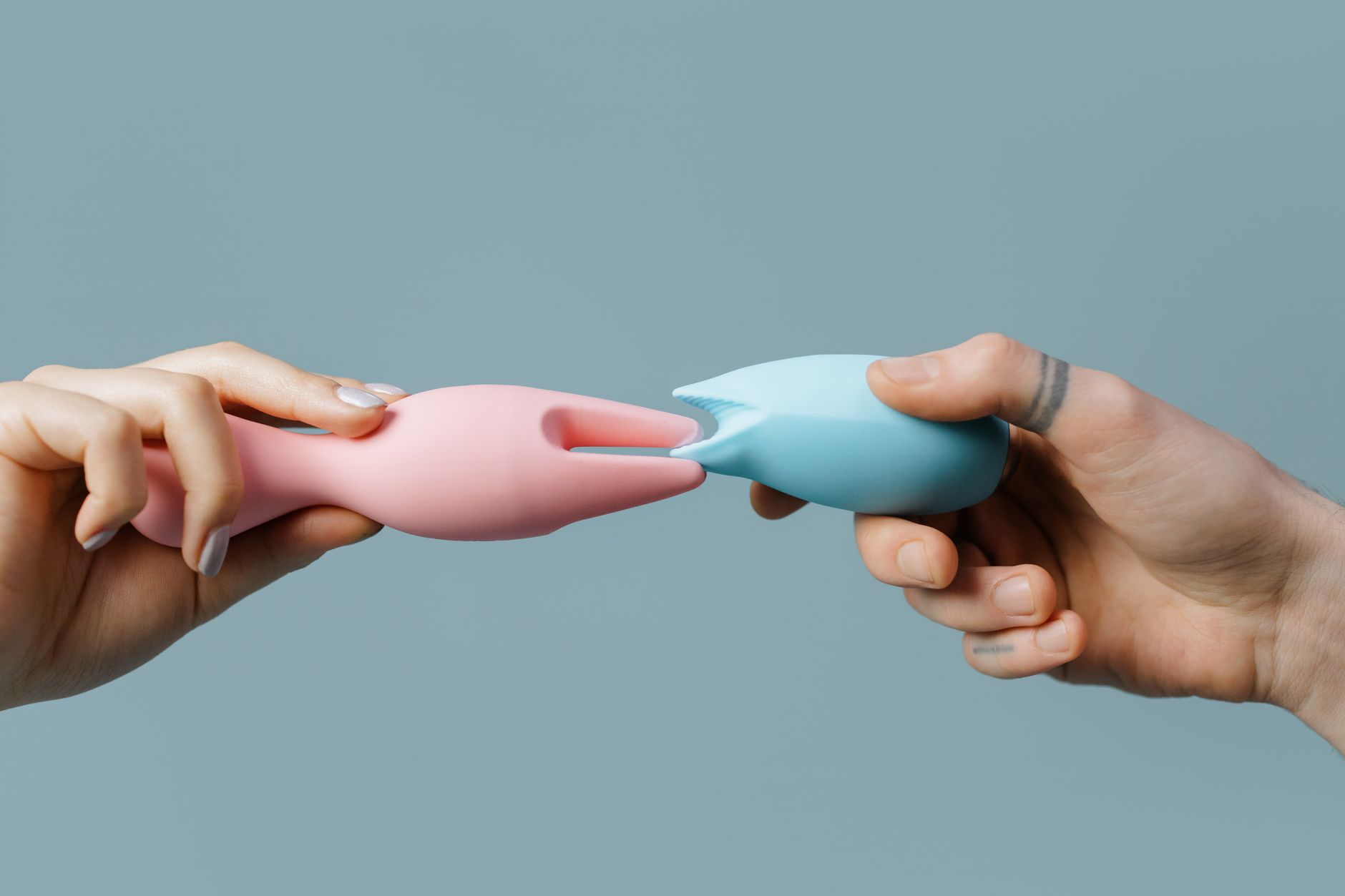
Lemon clitoral vibrators like the Lem work differently than traditional vibrators because they use suction instead of direct vibration. For someone experiencing numbness from routine, this distinction matters.
Direct vibration has a familiar rhythm. Your nervous system has learned to predict it. Suction, by contrast, creates a sensation your body hasn't fully mapped yet. It's different from any touch your partner has ever given you. It bypasses the "known" filing system your brain created.
When sensation is novel, your nervous system activates. Blood flow increases. Arousal builds faster. Orgasms feel sharper because your full attention is there. And critically, this rewiring doesn't happen alone in a drawer. It happens in the context of your relationship.
How to reintroduce lemon vibrators with a partner
The first mistake is framing it as "my pleasure" versus "our pleasure." It's not. When you experience sensation again, your partner feels that. Your responsiveness, your sounds, your actual physical engagement all change. This is enormously erotic for the other person.
Start by naming the numbness directly. Not accusingly. Not from a place of blame. Just "I've noticed that our rhythm has become so familiar that my body isn't responding the way it used to. I want to try something to wake that up. I want us both to feel this." That's it.
Then introduce the lemon vibrator as a third element, not a replacement. You're not replacing your partner's touch. You're adding a sensation that your nervous system hasn't learned to ignore. Many couples find that this novelty actually re-engages them with each other, because they're both paying attention again.
The second mistake is expecting instant arousal. Numbness takes time to build. Rewiring takes time too. Give yourself three to five sessions before you assess whether it's working. Your nervous system needs repetition to establish new pathways, but the point is that this repetition is novel, which is the opposite of the old problem.
The physiological reset that happens
When you engage a lemon clitoral vibrator consistently, a few things shift. First, your baseline arousal sensitivity increases. Your clitoris remembers what full engagement feels like. Second, you rebuild the association between pleasure and your partner's presence. Instead of sex being a routine you tolerate, it becomes something you're both genuinely anticipating.
Third, and this matters for people who've been numb for years, you retrain your body to prioritize sensation over performance. You stop watching yourself have sex and start actually having it. This is the real reset.
I often recommend that couples explore separately first. Use the lemon vibrator on your own for a few sessions so your nervous system gets familiar with what suction feels like, what each intensity level does, where it feels best. This isn't about excluding your partner. It's about gathering data so that when you use it together, you're not learning the device and learning your own response at the same time.
Rebuilding desire while staying in the relationship
One of the hardest conversations I have with long-term couples is this: "Your partner is not your primary source of arousal. You are. And your partner's job is to be present while you access it."
When you've been numb for years, you've outsourced your arousal to your partner's skill or performance. You've made them responsible for your sensation. That's unsustainable. The real work is reclaiming your own capacity for pleasure, then inviting your partner into that.
A lemon vibrator does this because it puts the control back in your hands. Literally. You control the intensity, the pattern, the duration. Your partner is present, but they're not the point. Your own sensation is the point. And paradoxically, this usually makes the experience far more intimate, not less.
When numbness signals something deeper
Sometimes routine sex numbness is purely neurobiological. Sometimes it's emotional. If you've experienced infidelity, betrayal, or prolonged emotional disconnection from your partner, numbness during sex can be your nervous system protecting you. In that case, a lemon clitoral vibrator might help you access sensation again, but you'll also likely need to address the relational issue.
This is important to separate. Sensation recovery is one conversation. Relationship repair is another. If your partner has broken trust, no vibrator will fix that. You need to rebuild safety first, then pleasure.
But if the numbness is purely about routine fatigue, if you fundamentally like and trust your partner, and you just need your nervous system to wake up again, lemon vibrators are genuinely transformative. They're one of the most effective tools I recommend for couples stuck in this particular trap.
The practical path forward
Start small. A lemon clitoral vibrator doesn't require a big conversation or a ceremony. It's a tool for your own pleasure. You might explore it on your own first, which means building familiarity without pressure. When you're ready, invite your partner in, not to perform, but to be present while you access sensation again.
Expect this to take two to four weeks before you notice real shifts in your arousal. Expect to feel a little awkward the first time. Expect your nervous system to wake up in ways that feel almost unfamiliar after years of numbness. That strangeness is actually the reset happening.
Most importantly, know that numbness after years of routine is not a sign your relationship is dead. It's a sign your nervous system needs novelty. And novelty is something you can actively build, together, without losing what you've built.
People also ask
How long does it take to feel sensation again after years of numbness?
Most people report noticeable shifts within two to four weeks of consistent use, but this varies. Some notice it within days because the sensation is so different from their usual experience. Others take longer because their nervous system has been downregulating arousal for a decade or more. The key is consistency, not duration. Using a lemon clitoral vibrator two to three times a week will rewire your response faster than sporadic use.
Can my partner feel threatened by me using a lemon vibrator?
Sometimes, yes, especially if the relationship already has trust or communication issues. This is why naming the goal matters. You're not looking for something your partner can't give you. You're looking for novelty to re-engage your own nervous system. Many partners find this actually relieves pressure, because you're no longer expecting them to be the sole source of your arousal. If your partner does feel threatened, that's worth exploring in the context of the relationship, not just the vibrator.
Does using a lemon sexual toy during partnered sex mean I don't want them anymore?
Absolutely not. If anything, the opposite is true. Numbness is what makes you check out from your partner. Sensation is what makes you present. When you rewire your arousal using a lemon vibrator, you're usually also rewiring your desire for your partner, because you're no longer going through the motions. You're actually engaged.
Is a lemon suction vibrator better than a traditional vibrator for sensation recovery?
For most people experiencing numbness from routine, yes. Traditional vibrators have a rhythm that your nervous system can learn and predict. Suction creates a different type of stimulation that tends to feel fresher to your clitoral nerves. This doesn't mean traditional vibrators are bad. It just means that for the specific problem of routine-induced numbness, lemon vibrators tend to work faster.
What if I use a lemon vibrator and still don't feel anything?
Then you're likely experiencing numbness from something other than routine. Medications, hormonal changes, depression, or unresolved relationship trauma can all cause sexual numbness that a vibrator alone won't fix. This is when you need to talk to a healthcare provider or a therapist who specializes in sexual health. A lemon vibrator is a tool for rewiring sensation. It's not a treatment for medical or emotional issues.
How do I introduce this to my partner without it feeling like criticism?
Frame it around what you want, not what they're not doing. "I've noticed I've been less responsive lately, and I want to wake that up for both of us" is very different from "You're not turning me on anymore." The first is about your nervous system. The second is about blaming them. Keep it about sensation recovery, not performance. Most secure partners actually appreciate this because it takes pressure off them to be the sole source of your pleasure.
The bottom line
Routine sex numbness is common, neurobiological, and fixable. It doesn't mean your relationship is over. It means your nervous system needs novelty. Lemon vibrators work because they offer sensation your body hasn't learned to ignore yet. You deserve to feel desire again within your relationship, not just outside of it. Start somewhere. Start anywhere. But start.
If you're ready to explore how sensation recovery fits into your specific relationship, or if you need guidance navigating this conversation with your partner, reach out. I'm here to help you rebuild what numbness has taken away.