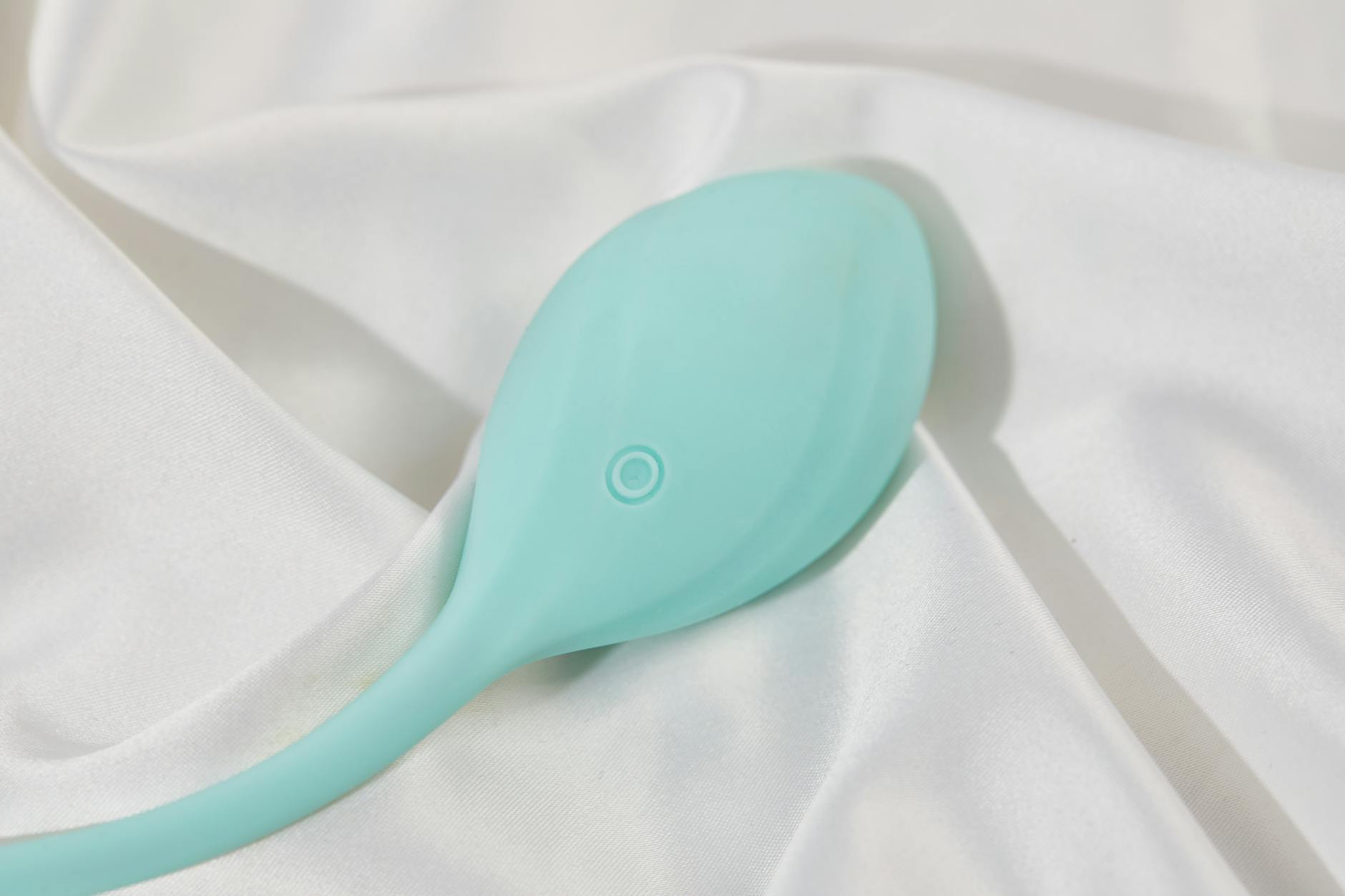
Let's talk about what actually happened to your arousal
Your arousal didn't vanish when your hormones shifted. But I get why it feels that way. The pathway changed. The speed changed. The sensation changed. And when something feels unfamiliar, our brain often interprets it as gone rather than transformed.
Here's what shifts during hormonal changes, whether that's mid-cycle drops, birth control adjustments, medication side effects, or menopause: the neurochemical cascade that wakes up desire moves slower and lighter. Estrogen supports the dopamine system that kicks arousal into gear. Testosterone drives the wanting piece. Progesterone in the second half of a cycle mutes both. When those hormones fluctuate or drop, you're not broken. You're operating with a different chemical landscape.
And lemon clitoral vibrators, specifically their suction-based mechanism, actually work better for that landscape than traditional vibrators do.
Why suction works when arousal is slower to build
There's a reason so many people report that a lemon vibrator feels like nothing, then suddenly everything. Suction stimulates the clitoral complex from a different angle than direct vibration does. Instead of rapid friction, you get rhythmic pressure and release. This matters hugely when arousal is building more slowly because suction can work for longer without creating numbness or irritation.
With traditional vibrators, the solution to slow arousal is usually "turn up the intensity." But that creates a problem: higher frequency can actually accelerate desensitization, which then requires even more intensity, which then requires even longer warm-up time. It's a feedback loop.
Lemon vibrators, by contrast, can stay at lower intensity (patterns 1-3) for extended periods because the sensation stays novel and engaging. You're not grinding the same nerve endings into submission. You're creating a rhythm that your nervous system stays curious about.
The arousal phase is longer now, and that's actually better
One of the biggest psychological shifts I see with hormonal changes is frustration that arousal takes longer to reach. People with longer cycle times or on certain medications report 15-25 minutes of warm-up instead of 5-10, and they frame it as a loss.
But here's the thing: extended arousal phases are not a downgrade. They're a different experience entirely. The buildup is actually richer. The orgasm, when it arrives, often feels more textured and less frantic. The body has time to warm up tissue, redistribute blood flow, and activate the parasympathetic nervous system more completely.
The Lem vibrator works brilliantly for this pacing because it encourages longer exploration. You're not chasing intensity. You're discovering texture. And discovery keeps the nervous system engaged longer than chasing a sensation does.
Lubrication becomes strategic, not a sign of failure
Hormonal shifts often mean tissue becomes thinner and lubrication decreases. Many people feel like this is a personal failing, a sign their body is not responding "correctly."
It's not. It's physiology. Thinner tissue + less natural lubrication = benefit from external support. That's it.
Water-based lube isn't a patch job. It's a tool that lets you extend arousal sessions without friction pain. And when you're not managing discomfort, you can actually focus on sensation. Lemon vibrators paired with good lubrication often unlock arousal that felt impossible with traditional vibrators, because you're not white-knuckling through the experience.
Start with a lube designed to stay slippery over extended use (not ones that get sticky after 10 minutes). Apply generously. Reapply midway through. Your nervous system will thank you because it can finally stop protecting against pain and start opening to pleasure.
The mental reset that matters more than the physical one
Here's something I see repeatedly in my practice: people rebuild arousal faster when they stop comparing new arousal to old arousal.
You had an arousal response shaped by a particular hormonal context. That context changed. So your arousal changed. Both versions are valid. Both versions are real. But comparing them creates a narrative of loss rather than adaptation.
Lemon clitoral vibrators help psychologically because they feel different enough from vibrators you've used before that your brain can't easily slip into comparison mode. You're not using the old tool the old way. You're exploring new sensation. And exploration is a different headspace than performance is.
When you sit down with a lemon vibrator expecting it to work like your old vibrator, you'll feel disappointed. When you sit down expecting to discover how this device works with your current body, you're set up to find something.
When arousal is flat, pattern matters more than power
Most people think arousal flatness is about needing stronger sensation. Usually it's the opposite. Flat arousal means the nervous system isn't getting coded signals to wake up. Random buzzing at high intensity doesn't code as "time to open." It codes as "noise." Rhythm codes as signal.
Lemon vibrators have programmable patterns. Patterns that pulse, patterns that build, patterns that vary. These patterns mimic arousal cues your nervous system recognizes. Start at pattern 1, sit with it for 2-3 minutes, let your body recognize the signal, then shift to pattern 2. This progression is how you rebuild arousal literacy when hormones have scrambled it.
I recommend starting every session at the lowest pattern and speed, then moving up only if you feel the sensation becoming background noise. Most people find they don't need to go higher than pattern 4 or 5, even after extended use.
Rebuilding arousal after hormonal shifts: the three-week experiment
If you're three weeks into hormonal changes and arousal feels gone, here's a concrete approach. This works whether you're starting birth control, stopping it, in the thick of a cycle shift, or navigating medication side effects.
Week one: Use your lemon vibrator solo for 15 minutes, three times. No goal of orgasm. The only goal is to notice sensation. Pattern 1 or 2, water-based lube, no pressure. Notice what changes after 5 minutes, after 10 minutes, after 15 minutes.
Week two: Same setup, but now notice what time of day works best for your arousal. Morning? Evening? Afternoon? Hormone-driven arousal has circadian patterns. Find yours.
Week three: Introduce a second variable. Partner presence but no touching. A fantasy or audio. Different lube. A different location. One variable at a time, because multiple changes at once just creates confusion.
Most people report measurable arousal shifts by week three using this method. Not back to baseline. To a new baseline. Which is the actual goal.
When to check in with a healthcare provider
If you're three weeks in and feeling completely flat, or if you're experiencing pain alongside the arousal change, flag it with a doctor or gynecologist. Some hormonal shifts warrant topical treatments, medication adjustments, or specialist referral. Arousal rebuilding is a tool. But sometimes there's a medical piece that needs handling first.
If you started a new medication or hormonal supplement, ask specifically about sexual side effects. SSRIs, some blood pressure meds, and certain antidepressants are known to dampen arousal. If that's your situation, your provider might adjust timing, dosage, or medication entirely. Don't white-knuckle through side effects. There are usually options.
The throughline: patience plus the right tool
Rebuilding arousal after hormonal shifts is not about finding more intensity. It's about finding the right sensation, the right timing, the right pacing. Lemon clitoral vibrators work better for this because their mechanism doesn't rely on getting "stronger" to stay engaging. They stay novel. They stay curious. They work with your nervous system instead of against it.
Your arousal didn't disappear. It recalibrated. And with the right approach, you'll find it feels richer than you remember.
People also ask
How long does it take to feel arousal coming back after a hormonal change?
Typically three to four weeks with consistent exploration. Your nervous system needs repeated signals to rebuild the arousal pathway. If you're only exploring once a week, expect six to eight weeks. Consistency matters more than duration. Three 15-minute sessions weekly beats one 45-minute session monthly.
Can lemon vibrators help if I'm on antidepressants and my arousal has flatlined?
Yes, but it's a partial solution. SSRIs and some other psychiatric medications genuinely dampen arousal by affecting dopamine and serotonin. A lemon vibrator can help you find sensation that cuts through that flattening, but you might also need to talk to your prescriber about timing (some people take SSRIs at night to minimize daytime side effects) or medication adjustment. How to Use a Lemon Clitoral Vibrator With Antidepressants and SSRIs covers this in depth.
Does the suction feel different if I've been using regular vibrators for years?
It usually feels less intense at first, then surprisingly more effective over time. Your nervous system is conditioned to interpret high-frequency buzzing as "arousal cue." Suction is a different signal. It takes 3-5 sessions for your body to recognize it as valid arousal stimulus. Stick with patterns 1-3 through that adjustment period, then see how you feel. Many people report lemon vibrator orgasms feel richer after ditching traditional vibrators.
What if arousal feels different with a partner than alone?
That's normal and often good. Arousal with a partner involves different nervous system states. Alone, you're in pure sympathetic activation (turned on). With a partner, you're managing safety, connection, and coordination at the same time. If partner arousal feels slower or less intense, try How to Use a Lemon Vibrator for the First Time With Your Partner. The device creates a bridge between solo exploration and partnered intimacy.
Is it normal for my arousal to be cyclical or inconsistent during hormonal changes?
Completely normal. Especially if you're mid-cycle (progesterone second half typically dampens arousal) or in early hormonal transition periods. Track patterns over four weeks instead of judging each session individually. You'll likely notice arousal peaks and valleys that map to your cycle or medication timing. Once you identify the pattern, you can plan sessions strategically instead of feeling randomly broken.
Can I use a lemon vibrator if arousal rebuilding is complicated by relationship stress?
Yes, but the vibrator alone won't fix the underlying tension. Solo exploration with a lemon vibrator can help you separate "my body's arousal capacity" from "my desire in this particular relationship context." Those are two different conversations. If relationship stress is major, addressing that piece (often with a couples therapist or relationship counselor) alongside physical arousal work tends to yield better results than trying to rebuild sensation in isolation. Pleasure exists in relational containers. Sometimes you need to tend the container before the pleasure rebuilds.
If you're navigating arousal changes and feeling stuck, you don't need to white-knuckle through it alone. The right tool, the right timing, and realistic expectations shift everything. And if you want support walking through this, reach out. That's what I'm here for.