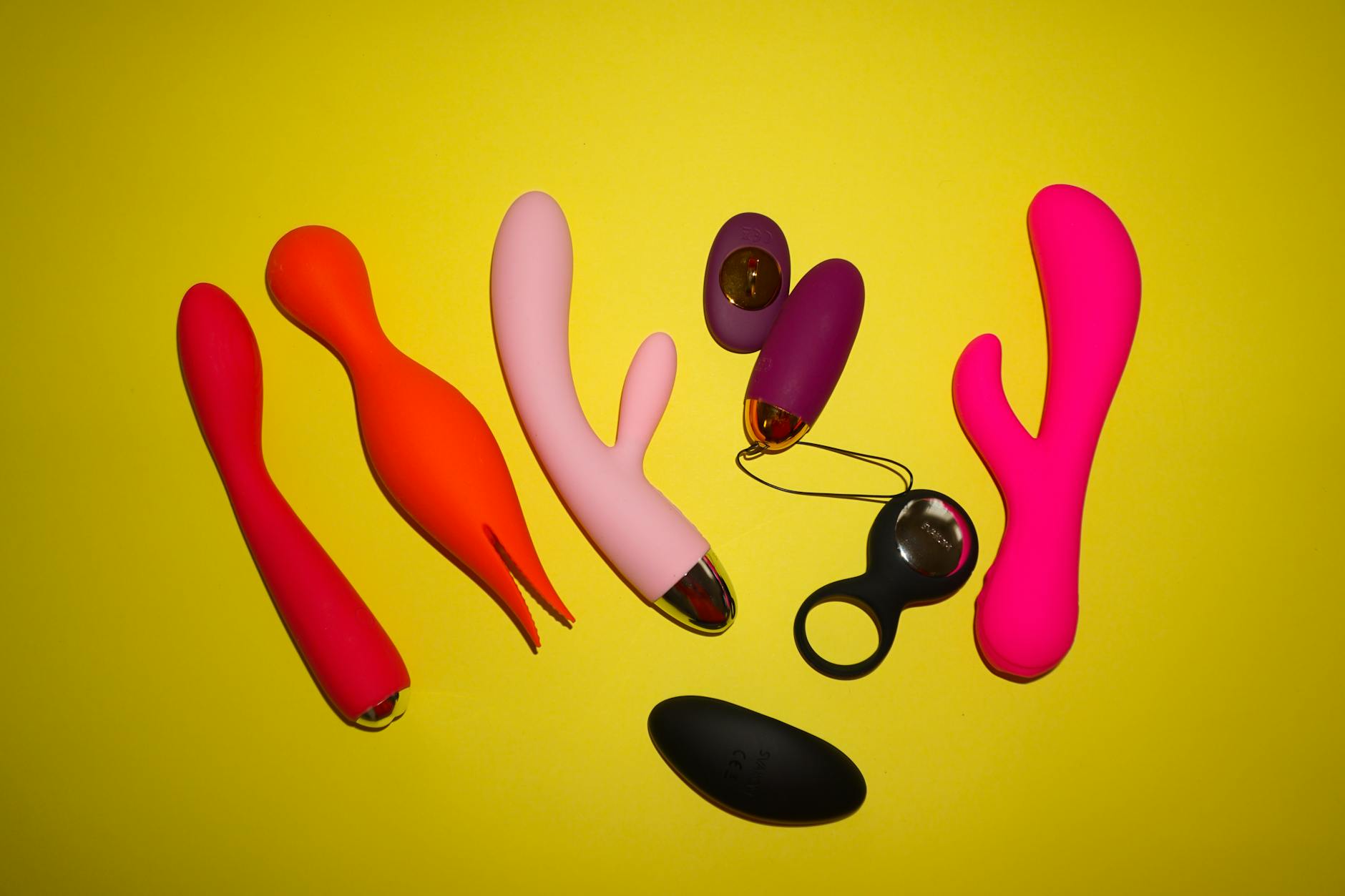
The trade-off nobody talks about
Antidepressants work. They quiet the noise in your head, they let you sleep, they make the morning feel less like climbing out of a pit. And then you realize that the thing you used to feel spontaneously—arousal, desire, the warm pull of attraction—has gone quiet too. It's one of the most common side effects of SSRIs and SNRIs, and it's also one of the least discussed, because there's shame baked into it. You're supposed to be grateful your depression is better. You're supposed to not care about sex anymore.
Except you do care. Or you want to. And your body isn't cooperating.
Here's what's actually happening: antidepressants increase serotonin, which helps regulate mood but also dampens dopamine and norepinephrine—the neurochemicals that drive desire and physical arousal. Your brain is receiving the message to feel calmer, which is the whole point. Your genitals got the memo too, whether they wanted it or not.
The good news is that this isn't permanent, and it's not unfixable. Your body can learn to respond again. It just needs different tools.
Why lemon vibrators work better during this transition
When sensation is muted, direct pressure vibration often feels either too much or too little. It's harsh when you're numb, or it takes forever to build any feeling at all. Lemon clitoral vibrators use gentle suction and pulsing rather than aggressive buzzing, which means they can reach arousal through a different neural pathway than traditional vibrators.
Think of it this way: if your usual route to pleasure is a highway that's been closed for construction, suction vibrators take a quieter back road. The sensations are different—softer, more building, less reliant on the kind of direct friction that doesn't work when you're on antidepressants.
The pattern variation in lemon vibrators also matters. Most traditional vibrators have one speed or a handful of incremental increases. Lemon vibrators offer varied pulse patterns that stimulate nerves in different combinations. When one sensation isn't registering, shifting to a different pattern can suddenly create a breakthrough moment.
The timeline: what to expect
Your body doesn't adjust to antidepressants in a straight line, and neither will your arousal. Most people notice genital numbness within the first two weeks of starting SSRIs. This is normal and, counterintuitively, a sign the medication is working on your serotonin.
The sensory dampening typically peaks around week three to four, then begins to normalize somewhere between month two and month six. Some people's bodies fully adapt; others find a baseline where sensation is lower than before but still functional. That variation is real and isn't about your body being broken.
What this means for using lemon vibrators: start now, but adjust your expectations. Weeks one through four are about exploration, not performance. You're learning what still registers, building new pathways of sensation, practicing patience with yourself. By month two, you might notice the patterns feeling more pleasurable. By month three, you may be having full arousal cycles again.
How to actually use them during this time
Start with the lowest intensity settings and sit with them. Numbness can feel like nothing is happening, which makes you want to turn it up or give up. Instead, try this: pick a pattern, use it for five to ten minutes on the lowest setting, then switch to a different pattern. You're not chasing a big feeling right now. You're mapping what your body can still detect.
Timing matters too. Your medication probably has a peak blood level where it's doing the most work. If you take SSRIs in the morning, your sensation will be most muted around mid-morning through early afternoon. Try exploring arousal in the evening or just before your next dose, when the medication level dips slightly.
Partners can help here, but the frame needs to shift. This isn't about "turning you on" and it's not about performance. It's you and your partner exploring sensation together as a collaborative experiment. If you're solo, give yourself permission to take as long as you need. Twenty minutes of light stimulation with zero climax is not a failure. It's data.
Many people find that lemon clitoral vibrators feel more approachable than penetrative toys during this phase, because arousal builds from the outside in. You don't need lubrication to vary, you don't need your body to cooperate in complicated ways. Just sensation, building over time.
The mental piece—it's bigger than you think
Here's something nobody warns you about: antidepressants don't just mute physical sensation. They also interrupt the mental loop that usually triggers arousal. You see your partner, or a thought crosses your mind, and usually that spirals into interest and desire. On SSRIs, that spiral gets shorter or stops entirely.
This creates a secondary problem that's not actually the medication. It's anxiety. You start worrying that you'll never feel desire again. You put pressure on yourself to respond. You begin avoiding situations that used to feel sexy because you know you won't be able to feel them. That anxiety creates a wall that's actually thicker than the medication itself.
Using lemon vibrators helps interrupt that loop. When you try and feel something, even a small something, it proves to your brain that sensation is still possible. You're not broken. The pathway isn't dead. It's just quieter right now. That knowledge matters more than you'd think.
Talk to yourself the way you'd talk to a friend. "My brain is healing. Pleasure is still in there. I'm building new pathways while my medication does its job. This is temporary and manageable." Sounds simple, but the internal narrative shapes everything.
When to talk to your doctor
If you're three months into antidepressants and sensation hasn't begun returning at all, or if the numbness is affecting your quality of life significantly, you have options. Some people dose differently—taking their medication on a slightly different schedule to create a "window" of higher sensation. Others switch to medications with fewer sexual side effects (bupropion, for example, is notorious for the opposite problem). Some add a second medication that counters the numbness.
Your doctor needs to know this is happening. Sexual function is not frivolous. It affects depression, relationship quality, and your sense of yourself. A good prescriber will take this seriously and work with you.
Don't just live with it. And don't stop taking your antidepressant to feel sensation again. That's the part that matters most. Your brain health comes first. But you also deserve to feel pleasure, and there are genuinely useful ways to rebuild that while the medication protects your mental health.
Practical setup for success
If you're new to lemon sexual toys, start with something simple like the core lemon vibrator. You don't need all the bells and whistles right now. You need reliable sensation that's easy to use without overthinking.
Create a space where you feel safe and unrushed. Not stressed about time, not worried about being walked in on, not thinking about what you should feel versus what you're actually feeling. Fifteen minutes of genuinely relaxed exploration beats an hour of anxious pressure.
Use water-based lubricant even though you might think you won't need it. The dampening from antidepressants includes vaginal lubrication for many people, so external lube reduces friction and lets the suction work more effectively.
If you're partnered, communication is everything. Tell them specifically what you need: "I want you here, but I need you to not expect anything from me. I'm rebuilding sensation and I need you to be curious, not evaluative." That's not asking for too much. That's reasonable.
The long view
Antidepressants are a trade-off, but it's usually a good one. Your brain chemistry was causing suffering, and now it's not. The dampened sensation is a side effect, not a life sentence. Most people do regain arousal capacity over time. Some find that once the fog lifts, they have clearer access to pleasure than they did when depression was running the show.
Using lemon clitoral vibrators during this adjustment isn't about forcing yourself to feel something you don't. It's about staying in contact with your own capacity for pleasure while your body and brain recalibrate. It's about not letting numbness become a belief system. It's about gentle persistence.
You're not broken. Your medication is working. Your sensation will return, or transform, or find a new baseline where it still exists. And you don't have to figure that out alone.
People also ask
How long does it take for antidepressant sexual side effects to go away?
Most people notice the dulling of sensation within two to four weeks of starting antidepressants. That numbness usually peaks around week three to four, then gradually improves over two to six months as the body adjusts. Some people's sensation fully returns to baseline. Others stabilize at a lower level of arousal but still function well. The timeline varies based on medication type, dosage, individual physiology, and whether you're also managing other conditions like anxiety. If you're past six months and sensation hasn't improved, talk to your prescriber about switching medications or adjusting timing.
Can I use a lemon vibrator if I'm on antidepressants?
Yes, absolutely. In fact, lemon clitoral vibrators are often easier to use during this phase because the gentle suction and varied patterns can reach arousal through different neural pathways than traditional vibrators. You might find you need lower intensity settings and more time, but that's expected. Start with the lowest patterns, explore slowly, and give yourself permission to feel little or nothing for the first few sessions. Your body is recalibrating, not failing.
Does the type of antidepressant affect how much sensation is dulled?
Yes. SSRIs like sertraline, paroxetine, and fluoxetine are most likely to cause sexual side effects. SNRIs like venlafaxine also frequently cause numbness. Bupropion (Wellbutrin) and mirtazapine are less likely to dampen sensation and sometimes increase it. Some people switch medications specifically because of sexual side effects. Others find that the numbness improves over time on the same medication. If you're struggling significantly, ask your doctor about medication timing (sometimes taking it right after sex helps) or switching to a medication with fewer sexual side effects.
Should I wait until my sensation returns to use a lemon vibrator?
No. Using a lemon vibrator now actually helps your body begin the process of relearning arousal. You're not forcing anything. You're exploring what's still accessible and practicing the pathways that will matter when sensation returns more fully. Many people find that regular, gentle exploration with lemon sexual toys accelerates the timeline for arousal recovery. Plus, the act of trying proves to your brain that pleasure isn't gone, just muted, which can ease some of the anxiety that makes everything feel harder.
Can I combine lemon vibrators with other strategies to rebuild sensation?
Completely. Combining lemon clitoral vibrators with longer warm-up time, reduced pressure and intensity expectations, partnered check-ins about arousal, and sometimes other techniques like tantric breathing can all help. Some people also find that communication with their doctor about medication timing, switching medications, or adding supplements like ginkgo biloba helps. Work with your prescriber and your partner. None of these strategies work in isolation, but together they create conditions where your body can begin rebuilding arousal even while the antidepressant is doing its job.
Is reduced sensation from antidepressants permanent?
For most people, no. The numbness typically improves or fully resolves as your body adapts to the medication, usually within six months. Some people do experience persistent sexual side effects on SSRIs, which is why alternatives exist. But even then, "permanent" doesn't mean untreatable. If sensation doesn't improve, you have options: changing medication timing, switching to a different antidepressant, adding a second medication, or sometimes using devices like lemon vibrators that work around the limitation. The key is not accepting numbness as permanent without exploring what can be adjusted.