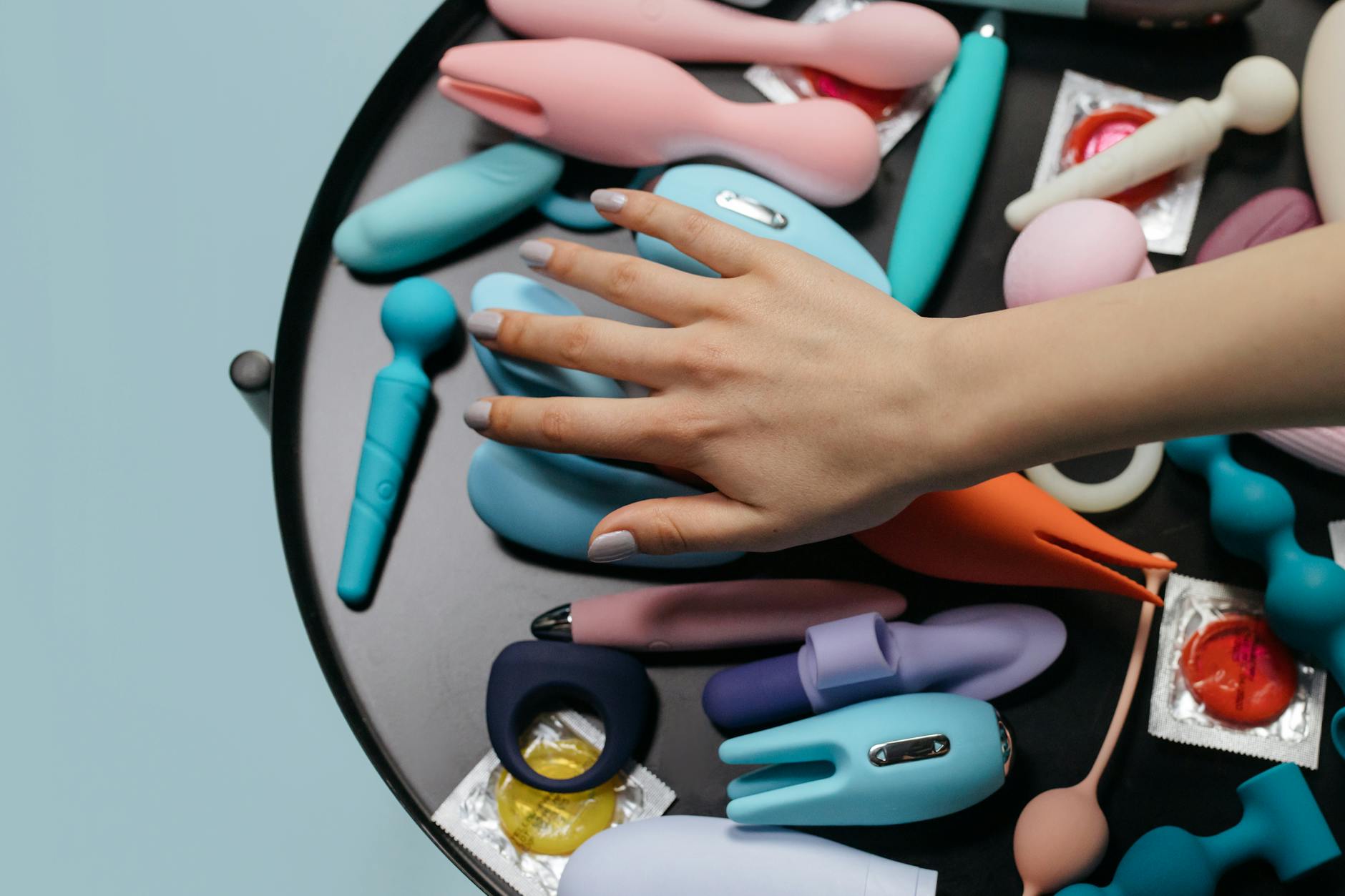
How to Introduce Lemon Vibrators to Your Relationship Without Killing the Mood
Let's be real: bringing up vibrators with a partner can feel heavier than it should. Most people either don't mention it at all or blurt it out badly at the worst possible time. Then it sits there, awkward and unresolved.
But here's what I've seen over decades of couples work. The couples who actually introduce lemon clitoral vibrators successfully aren't the ones with perfect communication. They're the ones who decide that pleasure matters enough to have an imperfect conversation about it.
Lemon vibrators work brilliantly for couples because suction stimulation feels fundamentally different from what a partner can do alone. It's not a replacement. It's an addition. Once you both understand that, the conversation becomes less "I need something you're not giving me" and more "let's explore this together."
Start before you're in the bedroom
The worst time to introduce the idea of a lemon vibrator is right before or during sex. Your partner's guard is down. They might hear "you're not enough" instead of "I want to feel something new." So don't do it there.
Instead, pick a moment that's calm and clearly non-sexual. Sitting on the couch. In the car. Walking. Somewhere you can talk without immediate physical proximity raising stakes. Your body language should say this is a regular conversation, not a moment of vulnerability being weaponized.
Start simple. "I've been thinking about trying something with vibrators. Nothing invasive. Just exploring more sensation. I'd like to do it with you." That's the whole opening. You're not asking permission. You're inviting participation.
Wait for their response. Most partners aren't saying no. They're usually saying "oh" while their brain catches up. Give them space to ask questions without you jumping in to defend.
Expect the standard five responses
In my experience, you'll hear one of these:
"Sure, I'm open to it." This is the easy path. Move to the practical conversation next.
"I don't know, that feels weird." This is normal. Weird doesn't mean no. Ask what feels weird about it. Usually it's "will it replace me?" or "I'm not sure how to use it" or "I don't want to feel rejected." Each of those is a different conversation.
"Where did this come from?" They're wondering if something's missing. Be honest. "I want to explore what feels good. I think it could be fun for both of us." Don't overcomplain about your current sex life, even if that's the reason. Save that for later if it matters.
Silence. They heard you but aren't processing yet. Don't fill it. Say "no pressure. Let me know what you think." Then actually let them think.
Defensiveness or a pivot. "Why, is something wrong?" or "Are you not satisfied?" This usually means they're tying your pleasure to their performance. This is bigger than vibrators. This is worth a conversation about how pleasure isn't a zero-sum game. You might say, "Nothing's wrong. I just want to expand what we explore together."
The practical stuff nobody talks about
Once they're open, get specific about logistics before you're both naked and eager.
How will it be introduced? Will you use it on yourself while they're watching? Together, with them holding it? Do you want them involved in the mechanics, or do you want to do that part solo? There's no right answer. Just talk about it so you're not figuring it out in the moment.
Lube is non-negotiable. Lemon clitoral vibrators work beautifully with a quality water-based lubricant. Tell your partner this upfront so it doesn't feel like a surprise or a sign something's wrong.
Start slow. Suction feels different than vibration, especially if you're used to traditional vibrators. Begin at lower intensities. It's not about proving the toy is "powerful." It's about feeling good together.
One toy, one conversation. Don't introduce a lemon clitoral vibrator, penetrative toys, and three other ideas at once. Build slowly.
What this actually looks like the first time
You've both agreed. Now you're in bed together. Don't make it ceremonial. It should feel like a natural extension of what you're already doing.
Start with skin contact and arousal first. Lemon vibrators work best when you're already warmed up, so nothing changes there. When you're ready, introduce the toy. Some people enjoy having their partner apply lube and turn it on. Others prefer to do that part independently. Honor what you agreed to.
The first experience won't necessarily be mind-blowing. That's fine. You're both learning how the sensation feels, what pressure and angle work, how your partner reacts. You're also building the neural pathway that says "we're collaborative about pleasure."
If it feels good, great. If it feels weird or uncomfortable, pause. Ask what's happening. Is the pressure too intense? Does the sound bother them? Is there self-consciousness? These are all fixable.
What happens after is actually the point
Once you've used a lemon vibrator together once, you've crossed a threshold. You've proven that talking about pleasure doesn't destroy intimacy. It can actually build it.
Some couples find that lemon clitoral vibrators become a regular part of their sexual routine. Others use them occasionally. Some find that the real win was the conversation itself. The couple who can say "let's try that" feels more connected than couples who stay stuck in silence.
That's where the magic is. Not in the toy. In the fact that you both decided your pleasure mattered enough to be awkward about it for ten minutes.
Common worries, decoded
"Won't they think I'm not satisfied?" Maybe initially. That's why you frame it as exploration, not complaint. "I want to see what else feels good" is different from "you're not doing enough."
"What if they feel replaced?" Some partners do feel that way at first. If it happens, you can say plainly, "This does one thing. You do everything else. They're not competing." You might also suggest using the lemon vibrator together, so it feels collaborative rather than solo.
"What if they want to use it on me and I don't like how they do it?" Tell them kindly. "Can I guide your hand?" or "Can I take over for a second?" Pleasure is specific. There's no shame in showing someone how you like to be touched.
"What if it makes things weird between us?" It might, temporarily. That's actually okay. Temporary weirdness is the cost of trying something new. Most couples say that after the first time or two, it feels normal.
The relationship-wide payoff
Couples who can talk about sex, toys, and pleasure openly report higher satisfaction across the board. It's not because the vibrator is magic. It's because you've both signaled that your pleasure matters. That you're willing to be uncomfortable in service of feeling good together.
If you're looking to deepen intimacy with your partner, lemon vibrators are a tool. But the real work is the conversation. You're not just introducing a toy. You're redefining how you talk about desire, vulnerability, and connection.
That's the relationship shift that lasts.
FAQ
What's the best way to bring this up if we've been together for years and never talked about toys?
Don't apologize for bringing it up late. "I've been thinking about this and want to explore together" works regardless of how long you've been together. Long-term couples sometimes have an advantage here. There's less ego and more "we've tried other things, let's try this." If they push back, you can acknowledge, "I know this is new territory. I'd like us to try it together if you're open."
Can lemon vibrators improve desire mismatch in couples?
Not directly. But they can help. When one partner has lower libido, introducing a lemon clitoral vibrator can make sexual moments feel fresher and less obligatory. It can also give the lower-desire partner agency. "I want you here with me, and I also want to use this" is different from pressure to perform. For deeper desire mismatch, that's a separate conversation. But toys can be part of a toolkit.
Should I buy the toy before or after the conversation?
After. Buy it together or let your partner choose it. That signals that this is collaborative, not something you've already decided. If you're buying privately, wait until you've had the initial conversation. Shopping together can actually be fun and removes any shame from the process. Browse My Lems together. Let them see the options.
What if my partner wants to use it solo and I'm not included?
That's fine. Lemon vibrators aren't just for couples. Some partners use them independently, and that's a healthy part of a sexual relationship. You can explore together sometimes and separately other times. As long as you've talked about boundaries and openness, there's no rule that says a toy must always be couples activity.
How do I know if the conversation went well?
They said yes, or they're thinking about it. Either one means you succeeded. It doesn't mean you're using the vibrator tomorrow. It means you opened a door. That door stays open. Sometimes partners need weeks to warm up to an idea. That's normal. You said your piece. Now give them space to decide.
Is there a specific type of lemon vibrator that works better for couples?
Lemon suction vibrators create sensation that's different enough from penetration or manual stimulation that it feels genuinely collaborative. A lemon clitoral vibrator like the Lem offers intensity and precision. Start with whatever appeals to you both aesthetically and functionally. The right tool is the one you'll actually use.
The conversation is the whole thing
Introducing lemon vibrators to your relationship isn't about the toy. It's about deciding that your pleasure, together, is worth being a little awkward. Most couples find that once they've had that conversation, the actual experience is way less fraught than they imagined.
You've got this. If you have questions about how to talk to your partner or want to explore further, reach out. That's what I'm here for.
Contact My Lems if you'd like personalized guidance on navigating this conversation.
Sources
Gottman Institute Research on Couples Communication and Intimacy Master, V. C., Johnson, V. E., & Kolodny, R. C. (1988). Crisis: Heterosexual behavior in the age of AIDS. Clinical studies on sexual satisfaction and toy integration in long-term partnerships