Let's talk about the conversation you're avoiding
You want to bring a lemon vibrator into your partnered sex life. Maybe you've used one solo and loved it. Maybe you've read about how a lemon clitoral vibrator works differently than traditional toys. Maybe you just know something's missing. But the thought of actually telling your partner makes you freeze.
Here's what I hear in my therapy room constantly: "What if they think I'm not satisfied with them?" "What if they feel replaced?" "What if it gets weird?" These fears are real. They're also almost never what actually happens.
Why partners worry (and why those worries are backwards)
Let me start with the research side. When one partner introduces a toy, the other partner's most common first reaction is curiosity, not insecurity. Not always, but statistically more often than not. The fantasy people carry into the conversation is never accurate.
What actually triggers defensiveness is secrecy. A partner who finds out you've been thinking about this and didn't tell them will feel excluded. A partner who you sit down and genuinely involve in the choice? They usually feel included, trusted, and relieved that you're both approaching pleasure as something to explore together.
The other thing that matters: frame this correctly. You're not saying "I need this because something's wrong." You're saying "I want to try something that might feel good for both of us."
The conversation: what to actually say
Don't overthink the opening. Honestly, the setup is harder than the words.
Pick the right moment. Not during sex. Not right after a fight. Not when either of you is stressed about work. Pick a moment when you're both relaxed, maybe sitting together after dinner, no phones, no distractions. The casual intimacy of a regular conversation is your friend here.
Start with curiosity, not demand. "I've been reading about lemon vibrators lately and got really curious about trying one together. Would you be open to that?" Notice the structure: I'm interested (not you should want this), I want to try it together (partnered, not solo), would you be open (question, not demand).
Expect questions. Your partner will probably ask what it is, how it works, why you want it. Answer directly. Lemon vibrators use suction stimulation instead of vibration. It feels different. You want to see what it's like. That's enough.
Don't over-defend. I see people add reassurance no one asked for. "It doesn't mean I'm not happy with you" or "You still matter." Both true, both unnecessary, and both actually weirdly defensive. It signals that you're protecting yourself instead of inviting them. Confidence is attractive. Conviction is attractive. Anxiety disguised as reassurance is not.
What to do if they say no
Some partners will say no. Immediate no, hesitant no, "let me think about it" no. Here's how to handle it.
Ask why. "What's making you hesitant?" Listen without defending. The answer might be they feel insecure, they don't understand how it works, they think it's weird, they need time to adjust to the idea. These are all different problems with different solutions.
If it's insecurity: "This is for us, not instead of you. I want your hands on me and your eyes on me and then something extra that feels amazing for my body. That's the whole thing."
If it's not understanding: show them information. There's nothing mystical about a lemon suction vibrator. You can explain how the suction works, why people like it, what it does differently than a traditional vibrator. Knowledge dissolves weird.
If it's just not their thing: "Okay. Can we revisit this in a few months?" Forcing it won't work. Letting them sit with the idea usually does.
What to do if they say yes
Don't rush to the bedroom. The conversation isn't the foreplay.
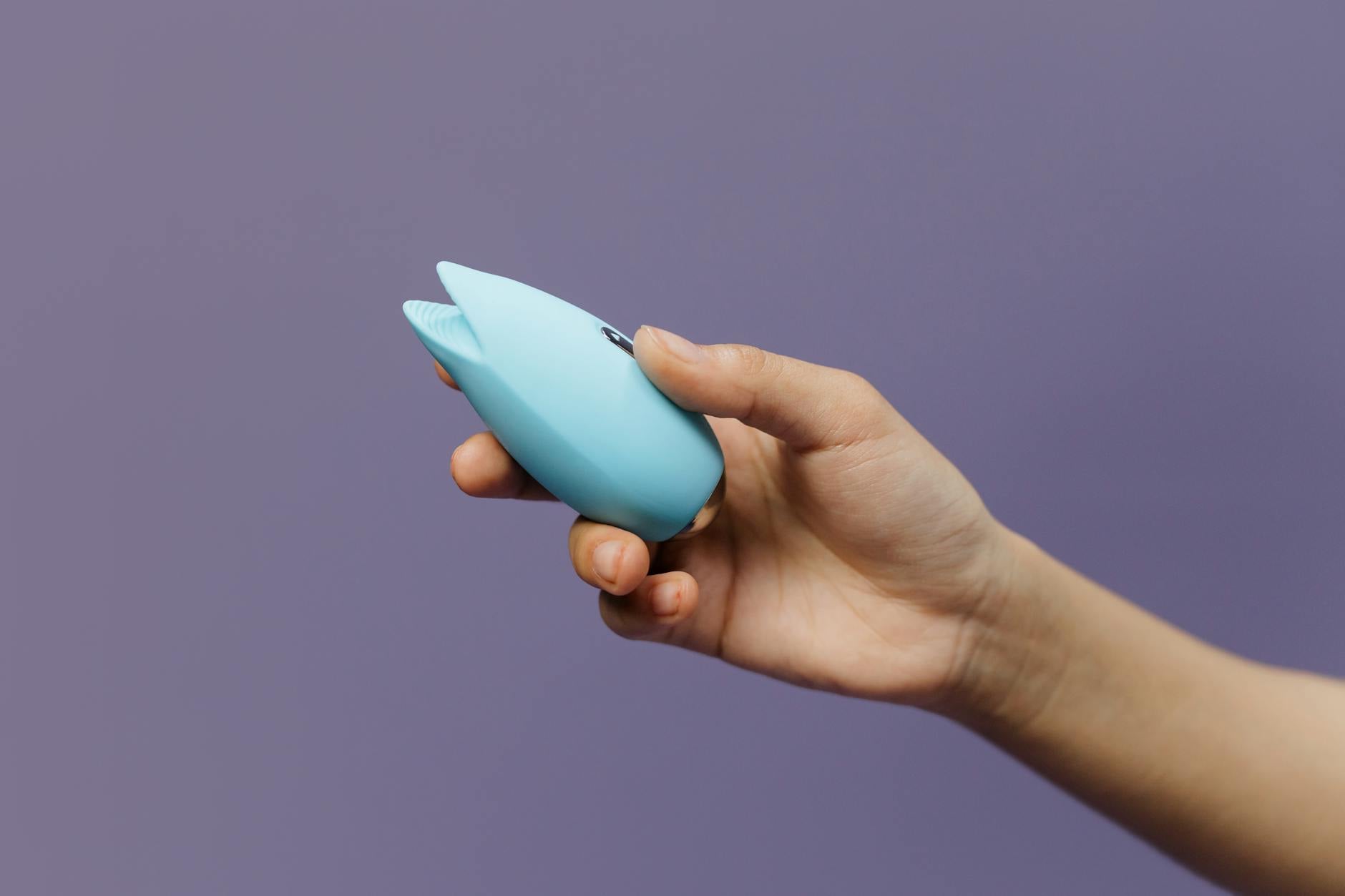
Involve them in the choice if you haven't already picked a toy. If you've been eyeing the Lem, show them. Let them see what it looks like, how it's designed, what it actually is. Some people feel better about the whole thing once they've held it, understood the size, seen that it's not some alien device.
Talk about how you'll use it. Will they hold it? Will you? Will you guide their hand? Will it be just during one specific part of sex or the whole thing? These details matter because they determine how involved your partner feels.
Set an expectation about the first time. "Let's just try it and see how it feels. No pressure for it to be perfect." This removes performance pressure for both of you. Your first time using a lemon vibrator with a partner might feel amazing or awkward or just fine. All of those are normal.
The actual first time
Let your body do what it does. If you orgasm faster than usual, that's information, not a problem. If you're self-conscious the whole time, that's normal and it usually passes by the second or third time.
If your partner is holding the toy, give them feedback. "That angle feels better" or "A little lighter" or "Yes, right there." They're not a mind reader and they want to do this right. Clear communication during sex is one of the strongest predictors of both satisfaction and relationship quality. It's also wildly underrated.
If it doesn't feel good, tell them. "I think I need to be more relaxed" or "Can we try this differently?" One awkward first attempt is not a referendum on whether this should happen.
When to mention pleasure differences
Here's something I tell couples: if you're introducing a toy because something's been missing, there's usually an underlying conversation that needs to happen too. Maybe you need longer foreplay. Maybe you've been faking orgasms. Maybe desire has dropped and you're both pretending not to notice.
A lemon vibrator can enhance great sex. It cannot fix broken communication. If you're bringing this in because you're hoping it'll solve a deeper problem, have that other conversation first. Or have it alongside this one.
"I want to introduce this toy and I also want to talk about how we're connecting overall." Two separate conversations, same evening. Both matter.
Why this usually goes better than you think
Most partners who initially hesitate become enthusiasts once they see how their partner responds. Pleasure is contagious. When you're having an orgasm that feels genuinely different and better, that's visible. It changes the energy in the room. Most partners find that incredibly hot.
You're also signaling something important: I trust you with this. I want you involved in my pleasure. I see this as something we do together, not something I hide or do alone. That's relationship-building, not relationship-threatening.
FAQ: The questions people actually ask
Will my partner feel replaced if I use a lemon vibrator during sex?
No. They might feel that way if you hide it, avoid eye contact during it, or treat it as a solo experience you're doing while they watch. They won't feel replaced if you're engaging with them, maintaining contact, and treating it as part of something you're doing together. A lemon clitoral vibrator adds sensation. It doesn't substitute for partner involvement unless you make it do that.
What if my partner wants to use it on me but I'm embarrassed?
Embarrassment usually fades by the second or third time. Start with your eyes closed if that helps. Ask your partner to narrate what they're seeing or feeling in a way that feels intimate rather than clinical. "You look beautiful like this" lands differently than "your vulva is reacting as expected." Tone and intention matter.
Is it normal to orgasm faster with a lemon vibrator than with a partner alone?
Completely normal. Lemon suction vibrators stimulate a different pattern of nerves than hand stimulation or traditional vibration. Faster orgasm with a toy doesn't mean solo orgasms are better. It means they're different. Some partners actually love this because they can see the full cycle happen and feel involved in it.
Should I ask permission before using a lemon vibrator with my partner?
Yes. This is your partner's body and their experience too. The conversation doesn't have to be complicated. "Would you be into trying a toy together?" covers it. If they've already said yes, you don't need to ask every single time, but checking in occasionally never hurts.
What if my partner suggests using a lemon vibrator and I'm the one who's hesitant?
Tell them. Say what you're actually worried about. "I'm not sure how I'll feel about it" is different from "I don't want to" and different from "I need time to think." All three deserve respect. All three are workable. Your partner probably didn't suggest this to pressure you. They suggested it because they thought you might enjoy it. That's usually kind.
Can a lemon vibrator improve sex if our relationship is struggling?
Not really. A toy can't fix disconnection or resentment. If you're bringing this in because you're hoping it'll solve deeper issues, that's worth examining first. You might introduce the toy anyway because it's fun, but the real work is the communication underneath it.
The takeaway
You don't need to rehearse this conversation. You don't need to wait for the perfect moment (it won't come). You just need to say what's true: I'm curious about this, I want to try it, and I'd like to do it with you.
Your partner might surprise you. Most do. And once you've had this conversation once, every conversation after it gets easier. You've already done the hard part. The rest is just pleasure.