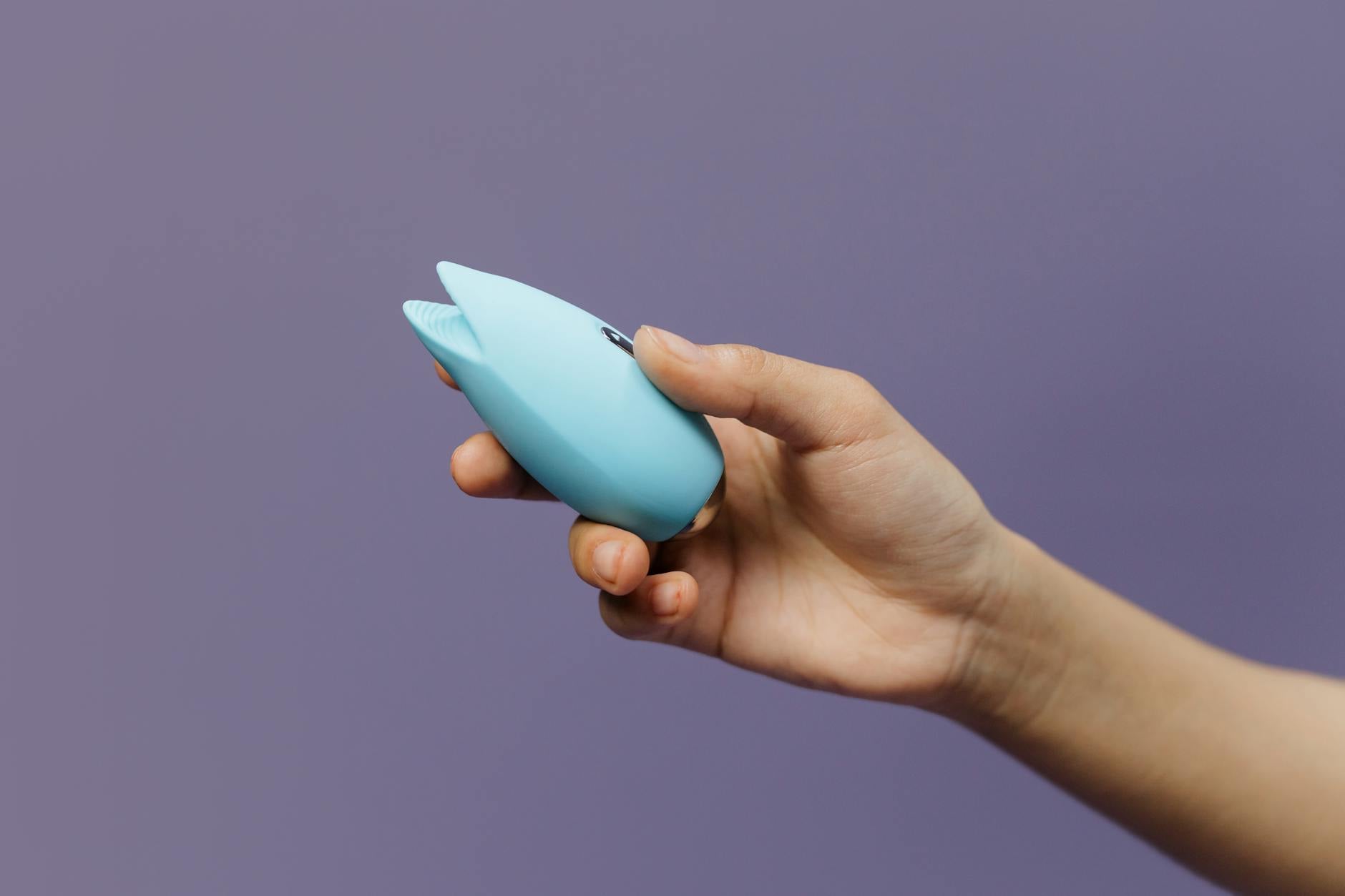
Let's be real about the gap
You haven't touched yourself in six months. Maybe longer. Life happened. Work got thick. A relationship shifted. You were tired, stressed, dealing with something that made pleasure feel impossible or irrelevant. And then one day, you thought about trying again. You found your lemon vibrator, turned it on, and it felt... wrong. Too intense. Numb. Even irritating. You figured something had broken.
Nothing is broken. Your body is just recalibrating.
What actually happens during a break
When you step away from solo pleasure for weeks or months, your nerve sensitivity doesn't disappear. But it does shift into a lower state of readiness. Think of it like a muscle that hasn't been used in a while. Not atrophied. Not damaged. Just quiet.
Here's the physiology: your clitoris has around 8,000 nerve endings, and they respond to stimulation through a combination of frequency, pressure, and pattern recognition. When you're not activating that circuit regularly, your nervous system downregulates sensitivity. It's efficient. It's also completely reversible.
The longer the gap, the more pronounced this shift feels. A two-week break is barely noticeable. A six-month gap? You might feel like you're starting over. Many of my clients describe the first session back as feeling like their sensitivity has flatlined. They increase intensity, chase sensation, and then feel frustrated when the lemon vibrator that used to feel perfect now feels scattered or even uncomfortable.
Why it feels uncomfortable (and what's actually happening)
Discomfort on restart has several sources, and it's useful to know which one you're experiencing.
Overstimulation at previous settings. If you jump back in at the intensity level that felt amazing six months ago, you're not accounting for lowered sensitivity. Your nerve endings are less primed to respond. The same pattern that used to feel like a perfect gradient now feels chaotic or even sharp. This isn't pain. It's overwhelm.
Clitoral tissue changes. If the break coincided with hormonal shifts, aging, medication changes, or stress, the tissue itself might have changed. Estrogen supports clitoral fullness and blood flow. Chronic stress flattens both. You might find that the suction sensation of a lemon vibrator, which usually feels like a gentle envelope of pressure, now feels more direct or intense than you remember.
Psychological resistance. This one's sneaky and real. If the break came after a relationship ending, sexual trauma, or burnout, your brain might have built a protective association with pleasure as "not safe right now." Physically, the lemon vibrator is fine. Neurologically, your autonomic nervous system is flagging it as a potential threat. Discomfort is the translation.
Pelvic floor tension. Stress, grief, and the absence of regular pleasure release all create pelvic floor holding. When muscles that support sensation are chronically tight, incoming stimulation feels less pleasurable and more irritating. A lemon clitoral vibrator's consistent suction can feel almost aggressive to a tense pelvic floor.
How to restart without forcing it
The goal isn't to white-knuckle your way back to where you were. It's to gently reawaken sensitivity at a pace your nervous system can follow.
Start with less intensity. Not the lowest setting. Not zero. Just one or two notches below where you remember being comfortable. Sit with that for 3-5 minutes. Your nerve endings will start waking up. Resist the urge to chase sensation by turning it up.
Focus on pattern over pressure. Lemon vibrators offer multiple suction patterns. If straight suction feels overwhelming, try one of the rhythmic or pulsing patterns. They're less constant, which gives your nervous system micro-breaks. That rhythm can feel more pleasurable than straight intensity, even at higher numbers.
Budget more time. Arousal takes longer to build when you've been away. Plan for 20-30 minutes, not 10. Most of my clients find that around the 15-minute mark, their sensitivity shifts upward noticeably. By 20 minutes, the entire experience feels different. You're not starting from zero. You're just waiting for the pathway to fully light up again.
Use lube, even if you don't usually. A long break often comes with less vaginal blood flow. Silicone-free lube (water-based) reduces friction and makes the suction sensation feel smoother. This is temporary. As you restart regular pleasure, natural lubrication usually returns.
Take the pressure off the outcome. The biggest block I see in restarting is the goal of orgasm. You're not trying to come on session one. You're trying to remember what pleasure feels like. There's a difference. One of those is attainable.
The timeline for sensitivity to return
Most people notice significant shifts within one to two weeks of restarting regular solo sessions. After two weeks, the difference is usually obvious. After four weeks, most clients report feeling back to baseline or even discovering deeper sensitivity than before.
The outlier: if you're on antidepressants like SSRIs, restarting might take longer. Medications that affect serotonin can blunt sensation, which compounds the already-quiet state of a long break. If that's your situation, extending the timeline to six weeks isn't unusual.
When discomfort signals something else
If discomfort is accompanied by pain, burning, or unusual discharge, something physiological might be happening. Genitourinary syndrome, yeast, or a skin change doesn't resolve itself and deserves a conversation with a gynecologist. But simple discomfort or overstimulation from restarting? That's normal and fixable.
If psychological resistance is strong—if you feel real anxiety or aversion when you think about restarting, not just skepticism about whether it'll feel good—that's worth naming. Sometimes a long break comes after something that needs processing. Talking to a therapist who specializes in sexuality can help you distinguish between physical discomfort and nervous-system-level resistance.
The good news
Your body hasn't forgotten. Nerve pathways don't disappear. They just shift into a quieter state, and that state reverses faster than you'd think. Most people find that within a month of gentle, consistent restarting, they're not just back where they started. They're often more attuned to their own pleasure than they were before.
Taking a break isn't failure. It's a pause. And restarting is learnable.
People also ask
Why does my lemon vibrator feel numb when I restart after time off?
Numbness is usually a sign of two things happening at once: reduced nerve sensitivity from the break, and starting at an intensity level that's too high for that lowered sensitivity. Your nervous system is downregulating when you're not stimulating regularly. That doesn't mean sensation is gone. It means it needs a gentle ramp-up. Start at pattern 1 or 2, take your time, and expect sensitivity to climb after 15-20 minutes of use.
How long does it take to feel normal pleasure again after not using a lemon vibrator for months?
Most people feel a significant difference within 2-3 sessions. After a week of consistent use, baseline sensitivity usually returns. Full reconditioning, where pleasure feels richer or more nuanced than before, typically takes 3-4 weeks. Everyone's timeline is slightly different depending on how long the break was, whether hormones have shifted, and how much stress you're carrying.
Can a long break damage your sensitivity permanently?
No. Taking a break doesn't cause permanent nerve damage. Sensitivity always returns once you resume regular stimulation. What can feel permanent is the anxiety that something broke. That feeling is real and worth acknowledging, but it's not an accurate read on what's happening physically. Your clitoris is waiting for you. It hasn't forgotten.
Should I use a different lemon clitoral vibrator after a long break?
Not necessarily. The issue isn't usually the device. It's the expectation and the intensity level. That said, if you find that the specific pattern or suction strength of your Lem vibrator feels off after the break, trying a different pattern setting or even a gentler Hello Nancy device temporarily can help. But most people find their original lemon vibrator feels perfect again once sensitivity returns.
Is discomfort after restarting a sign that my body has changed?
Maybe, but probably not in the way you're thinking. If the break coincided with hormonal shifts, aging, or medication changes, yes, tissue might have changed slightly. But that usually feels like a difference in what feels good, not outright discomfort. Discomfort typically means overstimulation at current sensitivity levels, not a permanent change. The fix is slower restarts at lower intensities.
How do I know if I should see a doctor about discomfort when restarting?
See a doctor if discomfort is paired with pain, burning, itching, unusual discharge, or changes in tissue appearance. Simple discomfort or overstimulation from restarting doesn't require medical attention. But real pain does. Don't push through it. Get it checked.
The bottom line
A long break doesn't erase your body's capacity for pleasure. It just makes that capacity quieter for a while. Restarting isn't about forcing sensitivity back. It's about giving your nervous system permission to wake up at its own pace. Gentler intensity, longer sessions, and patience do the work. Within a few weeks, you'll remember why you loved your lemon vibrator in the first place. And you might discover that pleasure, after a pause, feels even better than before.
When you're ready to explore restarting, we're here. If you have specific questions about your body or your experience, reach out at /contact. You deserve pleasure that feels good.
References & Resources
- Komisaruk, B. R., Beyer-Flores, C., & Whipple, B. (2006). The Science of Orgasm. Johns Hopkins University Press. (Foundational research on clitoral nerve pathways and sensitivity)
- Kaplan, H. S. (1979). Disorders of Desire and Other New Concepts and Techniques in Sex Therapy. Brunner/Mazel. (Classic framework for understanding sexual response cycles and restart cycles)
- Brotto, L. A., & Yule, M. A. (2011). Asexuality: Sexual orientation, paraphilias, and sexual dysfunctions. In D. H. Barlow (Ed.), Oxford Handbook of Clinical Psychology. Oxford University Press. (Research on arousal plateaus and recovery timelines)
- Frohlich, P., & Meston, C. (2000). Evidence that increased vaginal vasocongestion is associated with increased genital pleasurability in women with sexual arousal disorder. Archives of Sexual Behavior, 29(1), 1-13. (Blood flow changes in relation to pleasure perception)