Quando una relazione finisce, il tuo corpo diventa un territorio straniero
Non è solo una questione emotiva. Quando esce di scena un partner, cambia anche la dinamica fisica del piacere. Quella intimità che era costruita su un ritmo a due, su compromessi e abitudini, sparisce di colpo. E se non hai mai veramente esplorato il tuo corpo da sola, o non lo facevi da anni, il silenzio sessuale che segue può sentirsi infinito.
Qui è dove molti sbattono su un errore sottile. Pensano che il piacere sessuale sia un'abilità sociale che hai perso. In realtà, è una capacità che non hai ancora sviluppato completamente: quella di dare piacere a te stessa.
Perché dopo una rottura il piacere solitario è così difficile
Three things happen simultaneously when a relationship ends. First, your brain is still wired to anticipate a partner's rhythm, touch, and presence. That neural pathway doesn't just vanish. Second, shame often creeps in. If you were relying on your partner for validation around pleasure, you might internalize a quiet belief that pleasure without them is somehow less legitimate, or that touching yourself means you're "desperate."
Third, and this is the part nobody talks about, your body's muscle memory is genuinely different. Your pelvic floor, your breathing patterns during arousal, even your sensitivity thresholds have been calibrated around someone else's presence for months or years.
I've worked with countless clients rebuilding their sexual identity post-breakup. The ones who recovered fastest weren't the ones who jumped into dating again. They were the ones who invested in their own pleasure first. And that's not spirituality. It's neuroscience. When you deliberately pleasure yourself with focus and without distraction, you're rewiring the reward circuits in your brain. You're teaching yourself that you are a legitimate source of your own satisfaction.
Why lemon vibrators work better than your fingers when you're rebuilding
After a breakup, your touch might feel uncertain. Your fingers know what feels good to you, sure, but they also carry the muscle memory of "I'm doing this while waiting for someone else to participate." There's a psychological shift that happens when you use an external tool.
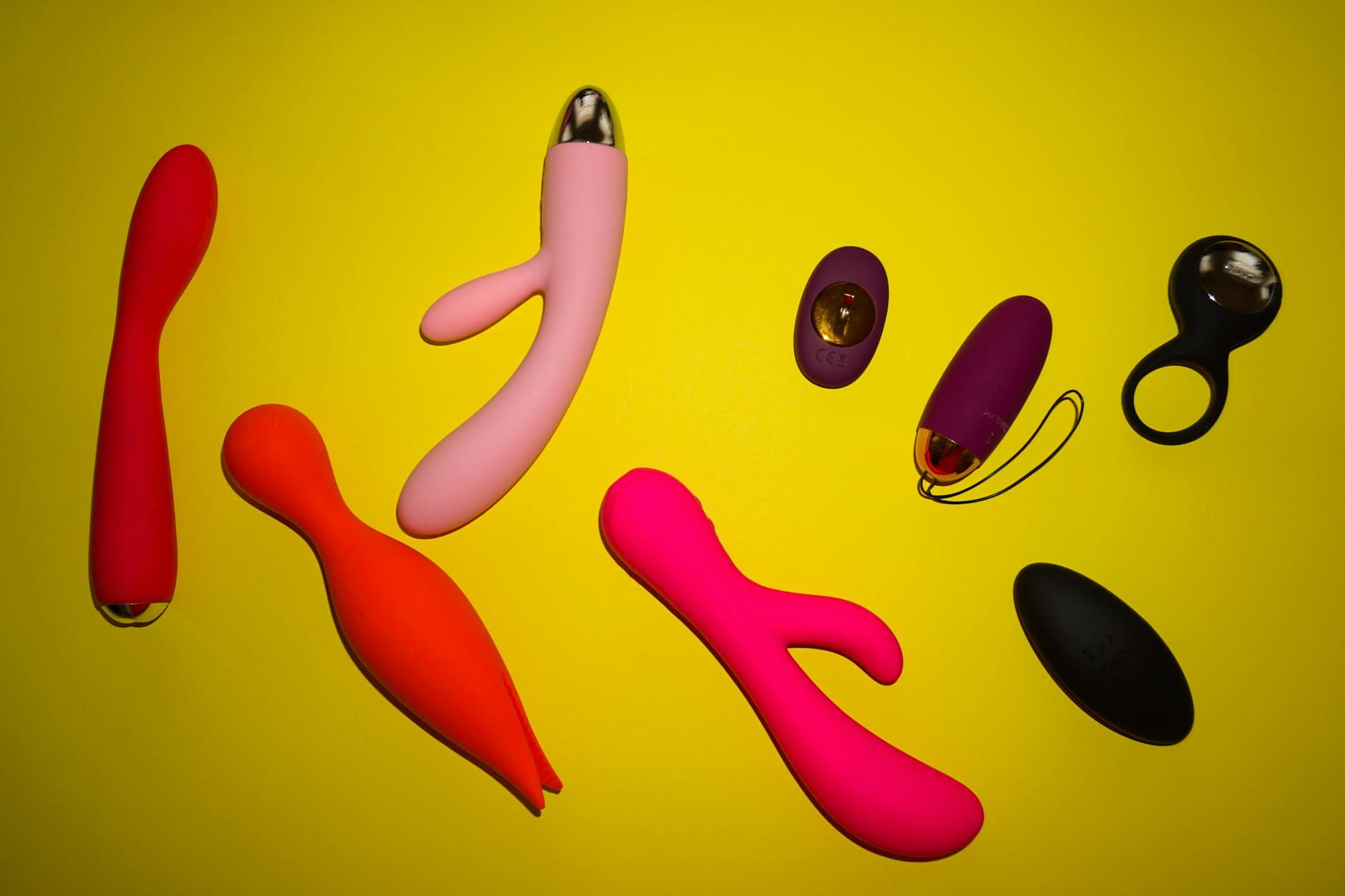
A clitoral vibrator like the Lem changes the equation. It's not your body touching your body. It's an instrument, and that instrument is optimized for one job: sustained, consistent stimulation that your hands physically cannot replicate on their own.
Here's what actually happens neurologically. Your clitoris has roughly 8,000 nerve endings concentrated in a space the size of a pea. Consistent, gentle suction stimulation (which is how lemon vibrators work) activates those nerves without the repetitive friction that can feel overwhelming when you're relearning your own body. The pattern is predictable. There's no performance pressure. You're not worrying about whether you're "doing it right."
Many women tell me that using a clitoral vibrator post-breakup feels like permission. Permission to feel good without having to earn it, without needing someone's validation or presence, without the guilt that sometimes attaches itself to solo pleasure.
Starting again: the five-week timeline that actually works
I recommend a phased approach, and it has nothing to do with willpower and everything to do with your nervous system's recalibration.
Week one: exploration without expectation. Get a vibrator. Unwrap it. Charge it. Hold it. Don't use it yet. Just get comfortable with the object existing in your space. Your brain needs to stop treating it as a tool of desperation and start treating it as a neutral object, like a pillow or a book. This sounds silly. It works.
Week two: touching without pressure. Use the vibrator at the lowest setting, not on your clitoris, but on nearby tissue. Inner thighs, lower belly, the outer labia. The goal isn't orgasm. The goal is sensation without performance. Spend 5-10 minutes. This rewires the reflex that says "vibrator equals must-orgasm-now."
Week three: slow introduction. Move to your clitoris, still at the lowest setting. Use water-based lubricant. Spend 15 minutes. If nothing happens, that's fine. You're not training for an orgasm competition. You're training your body to receive pleasure without waiting for someone else to deliver it.
Week four: pattern variation. Most vibrators have multiple speeds and patterns. Experiment. Notice which feels good, which feels overwhelming, which feels boring. This is data about yourself that you didn't have before. Own it.
Week five and beyond: pleasure without a timer. Stop thinking of "having a session." Start thinking of touch the way you think about a snack. Sometimes you want it, sometimes you don't. Sometimes it takes five minutes, sometimes thirty. There's no quota, no performance metric.
The shame conversation you actually need to have with yourself
After a breakup, many people feel guilty about solo pleasure in ways they never did while coupled. The logic is weird but common: "I'm touching myself because I'm lonely, not because I actually want to." Or: "I should be focusing on healing, not on sex."
Here's what's true. Pleasure is a form of healing. When you orgasm, your body releases oxytocin (bonding), dopamine (reward), and serotonin (mood stabilization). Those are not frivolous neurochemicals. They're tools for nervous system repair.
Second, wanting pleasure doesn't disqualify wanting to heal. Those two things coexist. You can cry at night and touch yourself during the day. You can miss your ex and discover that your body feels amazing under your own hands. Humans hold contradictions.
What I tell my clients: if touching yourself feels like punishment (forced, joyless, obligatory), stop. If it feels like permission, keep going. The difference matters.
When to introduce a partner back into the picture (spoiler: after you know yourself again)
One of the best gifts you can give a future partner is a clear knowledge of what your body actually likes. That sounds obvious. In practice, most people enter new relationships still operating off the muscle memory of the last one, or worse, off a vague idea of what they "should" like.
If you spend a solid two to three months getting reacquainted with your own body and your own pleasure through solo exploration, you show up differently in partnered sex. You know your patterns. You know what actually works for you. You can communicate without apology. You can say "I want more suction" or "I need twenty minutes of warm-up" because you know it's true.
That knowledge is attractive. It's also, more importantly, liberating for you.
FAQ: Questions People Actually Ask
Quanto tempo dopo una rottura dovrei aspettare prima di usare un vibratore al limone?
Non c'è un timer universale. Culturally, there's often an expectation that you should wait until you're "healed." In reality, there's no healing timeline that applies to everyone. Some people feel ready a month after a breakup. Others need six months. The question isn't "how long should I wait." It's "do I feel ready to experience pleasure without my ex's presence." If the answer is yes, you're ready. If it's no, that's information too.
I vibratori al limone sono difficili da usare per chi non ha mai avuto rapporti sessuali solitari?
No. If anything, they're easier. Your fingers require technique and endurance. A clitoral vibrator requires you to show up with an open body and a curious mind. That's it. Start at the lowest setting. Use lubricant. Give yourself 15 minutes. If nothing happens, that's not failure. You're still rewiring your nervous system toward self-pleasure.
È normale sentirsi in colpa mentre si usa un vibratore al limone dopo una rottura?
Yes, and it's worth examining why. Sometimes guilt is just lingering shame about pleasure in general. Sometimes it's grief disguised as guilt. You loved this person. Your body is grieving. That doesn't mean you shouldn't touch yourself. It means you should recognize the grief, let it exist, and keep going anyway.
I vibratori al limone possono aiutare con l'ansia sessuale dopo una relazione negativa?
Totally. If your last relationship involved any form of sexual pressure, shame, or mismatch, your nervous system has learned to associate sex with discomfort. Using a vibrator entirely on your terms, at your pace, with no performance pressure, actively rewires that association. You're teaching your body that solo pleasure is safe. That's powerful recalibration work.
Quanto spesso dovrei usare un vibratore al limone per sentire i benefici?
There's no "right" frequency. Some women find that twice-weekly solo sessions help them feel grounded and reconnected to their bodies. Others prefer once a week. Others touch themselves multiple times a day. The answer is: whatever frequency makes you feel good without it becoming another obligation. The moment it feels like a chore, you've crossed into performance mode. Back off.
È strano usare lo stesso vibratore al limone che usavi con un partner?
Not at all. Your vibrator doesn't hold the memory of your relationship. You do. If looking at it triggers difficult feelings, take a break. Buy something new that belongs only to you. Or, if you're ready, reclaim the one you have by using it solo until the associations shift. Either choice is valid.
La ricerca mostra che il piacere sessuale è uno strumento di guarigione
One study published in Sexual and Relationship Therapy found that women who engaged in deliberate self-pleasure during relationship recovery reported faster emotional recovery and higher post-breakup relationship satisfaction with future partners. The mechanism isn't complicated. When you know your own body's capacity for pleasure, you stop outsourcing your happiness to another person. That's not selfish. That's foundational.
Using a clitoral vibrator after a breakup isn't about replacing your ex or proving something. It's about honoring the fact that your body is yours, your pleasure is legitimate, and you deserve to feel good right now, not eventually, not when you're partnered again, but today.
The Lem and other lemon-shaped vibrators are designed for exactly this: solo exploration, low-pressure stimulation, and the reclamation of your own capacity for joy. Start where you are. Use it at your pace. Notice what feels good. That's all the permission you need.