
Here's what nobody talks about
Orgasm timing matters. Not because faster is always better, but because knowing what's realistic kills the anxiety that kills pleasure. If you're expecting five minutes and nothing happens in ten, your brain starts spinning stories about what's wrong with you. Then the whole experience collapses.
Lemon clitoral vibrators, especially suction-based toys like the Lem, genuinely do shift the timeline. Here's what the data actually shows and why.
The baseline: how long orgasms take without toys
Let's start with the control group. Research from the Journal of Sex & Marital Therapy (2016) found that people with vulvas typically take 10-20 minutes to reach orgasm during partnered sex. Solo, it's faster. Studies show 5-15 minutes for manual stimulation alone.
But here's the thing: those numbers hide massive variation. Some people finish in two minutes. Others need thirty. Both are normal. Age, stress, medications, arousal level, and whether you're thinking about your to-do list all play a role.
The faster-isn't-better principle applies hard here. An orgasm reached in two minutes under pressure feels nothing like an orgasm that builds over twenty.
What suction-based lemon vibrators actually change
Traditional vibrators work through sustained oscillation. The toy vibrates at a set frequency, usually 50-100 Hz. Your body gradually builds toward orgasm as the stimulation accumulates.
Suction-based designs like the Lem work differently. They create a gentle seal and release rhythm that mimics the intensity pattern of oral sex. Here's the neurological difference: suction activates more nerve endings simultaneously while distributing pressure more evenly across tissue.
In plain terms? Your clitoris gets more targeted stimulation with less mechanical fatigue. Your nervous system recognizes the pattern faster. Arousal builds steeper.
That said, "faster" doesn't mean "instant." People report orgasms with lemon clitoral vibrators typically arriving in 3-8 minutes of active use. That's noticeably quicker than the traditional vibrator baseline, but it's still not a light switch.
Why your personal timeline matters more than averages
Here's where individual physiology enters. Three things shift your personal orgasm timeline:
Clitoral sensitivity and nerve density. Some people have naturally more sensitive tissue. The same lemon vibrator that takes you four minutes might take your partner eight. This isn't a performance issue. It's biology.
Arousal state on arrival. If you pick up a Lem when you're already halfway to arousal from foreplay or fantasy, orgasm comes faster. If you start from neutral, you need more runway. The toy doesn't change that. It just makes the runway shorter than traditional toys would.
Pelvic floor tension. A relaxed pelvic floor responds to stimulation faster. A tense one requires more stimulation to register. If you're anxious, rushing, or holding tension, even the best lemon adult toy will take longer. This is the single biggest variable people miss.
The mental game that actually determines speed
Here's what I see in practice: people who clock sub-five-minute orgasms with their lemon sexual toys aren't lucky. They've usually cleared two mental blocks.
Block one: performance pressure. The moment you start watching the clock, your sympathetic nervous system activates. That's the fight-or-flight response. Blood flow redirects away from your genitals. Arousal stalls. Speed drops.
The fix isn't trying harder. It's setting a timer for 20 minutes, putting the phone away, and deciding that anything that happens in that window is a win.
Block two: destination fixation. Orgasm becomes the only goal. Every sensation gets evaluated against "Is this getting me closer?" That analytical brain cuts arousal dead.
When people switch to curiosity mode ("What does this pattern feel like on this part of my body?"), orgasms come faster. Counterintuitive but documented repeatedly in sex research.
The role of lubrication in timing
Tissue moisture affects how quickly sensation registers. Drier tissue needs more stimulation to trigger nerve response. Lubricated tissue responds faster.
For lemon clitoral vibrators specifically, a small amount of water-based lube applied to both the toy and your skin cuts the activation time noticeably. Not because the toy works better, but because the signal travels faster through moist tissue.
This matters especially if you're using a Lem when tissue is naturally drier (morning, stress, certain phases of your cycle, or post-menopausal). Lube isn't a workaround for broken response. It's a normal part of the setup, like tuning an instrument.
Comparing timeline: Lem versus traditional vibrators
If you've used traditional vibrators, the Lem timeline usually feels compressed. Here's why.
Traditional wand or bullet vibrators disperse stimulation across a wider surface area. Sensation is diffuse. Your nervous system takes longer to register the signal as "this is pleasurable."
The Lem concentrates stimulation on the clitoral complex through suction. More signal density means faster recognition and arousal buildup. People report dropping 3-5 minutes off their average timeline after switching.
But again: this doesn't mean better. Faster just means you spend less time warming up. The orgasm quality isn't inherently superior. It's just different.
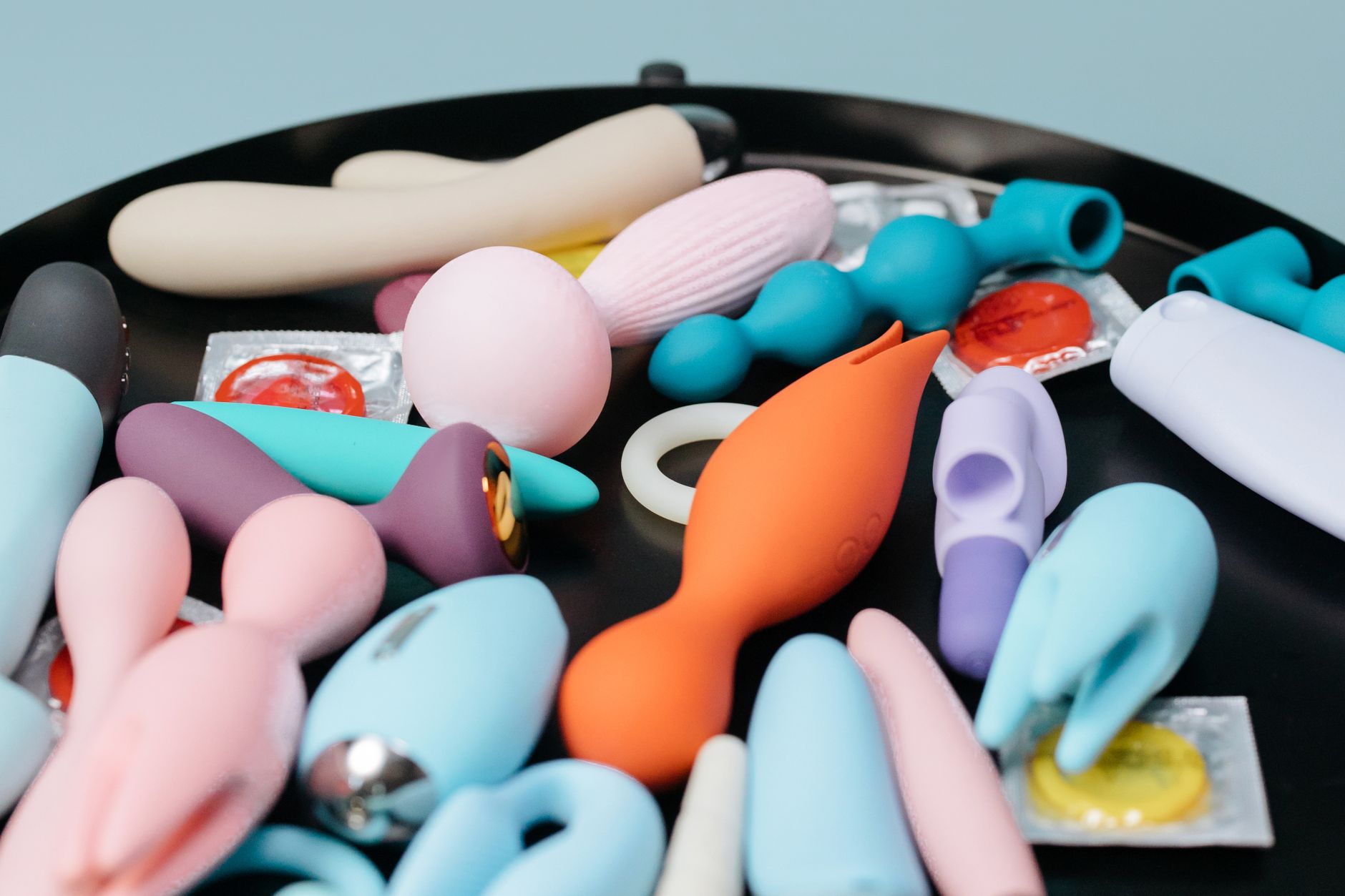
Photo by cottonbro studio on Pexels
Pattern, speed setting, and your orgasm timeline
The Lem includes multiple intensity levels (typically patterns 1-4). Conventional wisdom says higher intensity equals faster orgasm.
It's not that simple. Higher intensity can actually extend timeline if your nervous system finds it too much and triggers a protective dampening response. Conversely, mid-range intensity on the right pattern can feel perfect and move things forward quickly.
Most people find their sweet spot is pattern 2-3 at moderate intensity. Starting there, rather than ramping up, often shaves time off your path to orgasm. Your body gets what it's asking for without overwhelming input.
How medications and hormones shift your personal timeline
SSRIs and other antidepressants (which about 1 in 4 people use) typically slow orgasm timeline by 5-15 minutes on average. That's not a toy issue. That's neurochemistry.
When people ask whether a lemon vibrator "helps" with SSRI side effects on orgasm speed, the answer is yes, but indirectly. The Lem's efficiency cuts your baseline by 3-5 minutes. If medication adds 10 minutes, you're now at 8-12 instead of 13-18. It doesn't undo the medication effect, but it helps counterbalance it.
Hormonal shifts (including perimenopause and menopause) also affect timeline. Tissue becomes thinner and less responsive. Why Lemon Vibrators Feel Different During Perimenopause covers this in depth, but the practical point: post-menopausal bodies often need slightly longer timelines with lemon vibrators compared to reproductive years. That's not a performance drop. That's adaptation.
The sweet spot: realistic timelines for different scenarios
Here's what I tell clients to expect.
Solo play, well-rested and aroused: 3-8 minutes with a Lem. Most people cluster around 5-6 minutes once they're practiced with the toy.
Solo play, baseline arousal (you're not particularly in the mood, just exploring): 8-15 minutes. The toy still works faster than traditional vibrators, but you're starting from a lower baseline.
With a partner, concurrent stimulation: 5-10 minutes. The added mental arousal from partner presence typically accelerates the timeline significantly.
Stressed, distracted, or using the toy for the first time: 15-25 minutes. This isn't the toy failing. This is your nervous system taking time to trust the sensation and relax into it.
If you consistently fall outside these ranges, it's worth examining whether pelvic floor tension or anxiety is the limiting factor, not the toy.
Building efficiency over time
Your body learns. The more consistently you use a lemon vibrator, the faster your timeline gets, not because the toy improves but because your nervous system recognizes the pattern. You're not learning to fake it. You're training your body to recognize what it likes.
People often see a 2-3 minute speed-up between month one and month three of regular use. That's normal adaptation, not desensitization.
FAQ: Lemon vibrator timing and orgasm questions
Why does my Lem take longer some days than others?
Stress, sleep, hydration, where you are in your cycle, whether you've eaten recently, and how aroused you were on arrival all shift your timeline. The toy is constant. Your body isn't. Both matter equally.
Does using a lemon vibrator on higher intensity get me to orgasm faster?
Not reliably. Too much intensity can trigger a protective neural shutdown. Most people find a moderate intensity on the right pattern gets results fastest. Experiment with pattern 2 or 3 as your baseline rather than jumping to pattern 4.
How long should I wait before trying a lemon vibrator if I'm a total beginner?
Give yourself at least 10-15 minutes minimum with no pressure about outcome. Your nervous system needs time to recognize what's happening and relax into it. After a few sessions, you'll know your personal timeline.
Is it normal if my lemon clitoral vibrator doesn't get me to orgasm at all?
Yes. Some people find suction-based toys don't align with their particular neural wiring. Or you might be anxious, in a poor mental space, or have tension patterns that need attention first. Try it 3-4 times under no pressure. If it still doesn't land, it's not the right tool for you. That's information, not failure.
Do lemon vibrators work faster for people with erectile dysfunction partners?
Not directly, but indirectly, yes. Because the Lem is fast and independent, you can reach orgasm before or after partner sex without the timeline pressure that used to exist. Check out How Lemon Vibrators Work Better for Partners With Erectile Dysfunction for the full context.
Will my lemon vibrator stop working faster the more I use it?
The toy won't change. Your baseline might shift slightly due to hormones, stress, or pelvic floor tension. That's about your body, not the toy wearing out. If timing suddenly jumps up by 10 minutes, look at what else changed (stress, sleep, medications, cycle) rather than assuming toy desensitization. For more on this, Why Lemon Vibrator Intensity Feels Less Strong Over Time has the neuroscience.
The real takeaway
Lemon vibrators, especially suction-based designs like the Lem, genuinely do compress your timeline. Most people see 3-5 minute speed-ups compared to traditional toys. But speed is meaningless if your nervous system isn't on board.
The real work isn't using the toy. It's building the mental safety, pelvic floor relaxation, and arousal foundation that lets your body respond quickly. The toy just amplifies what's already there.
Start with realistic expectations (3-15 minutes is the normal range), give your body time to learn the new sensation pattern, and notice what variables actually matter for you personally. That's how you optimize.